A right that expires
Access opens at the start time and stops at the end. No more leftover rights that someone forgets to withdraw.
The key is the oldest booking system in the world: whoever has it can get in, whenever they like, for as long as they have it. It is very convenient, and that is exactly what makes it unsuited to a space shared between several occupants. A key knows nothing of the time, the duration or the person.
Updated 30 August 2026
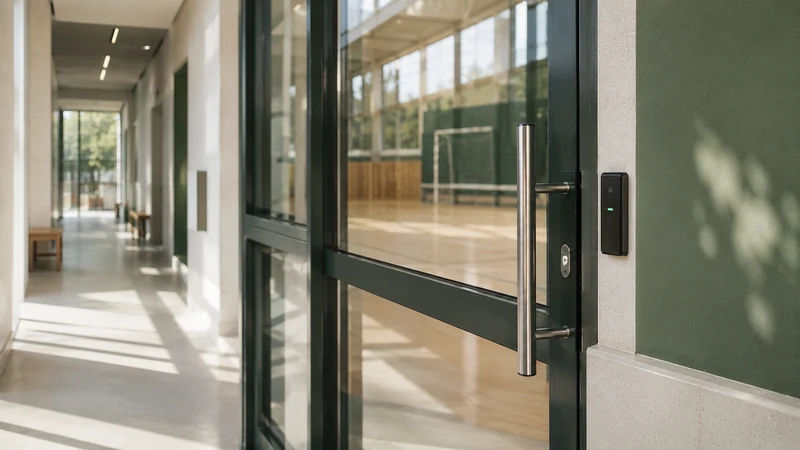
Handing over a key means granting a permanent right for a temporary need. A club’s contact person needs to get in for two hours on a Tuesday; they leave with the ability to get in 168 hours a week, with no end date, even after stepping down from their role. Nobody wants that, but it is the only thing a key can do.
On top of that comes a management cost that nobody puts a figure on. Every loan means an appointment, every return another one, every loss a new lock cylinder and a new set of copies for all the legitimate occupants. On a facility shared by five or six organisations, this cost never stops.
And then the key says nothing. If there is damage or a door left open, it tells you neither who nor when. It gets settled from memory, between people who will have to go on working together.
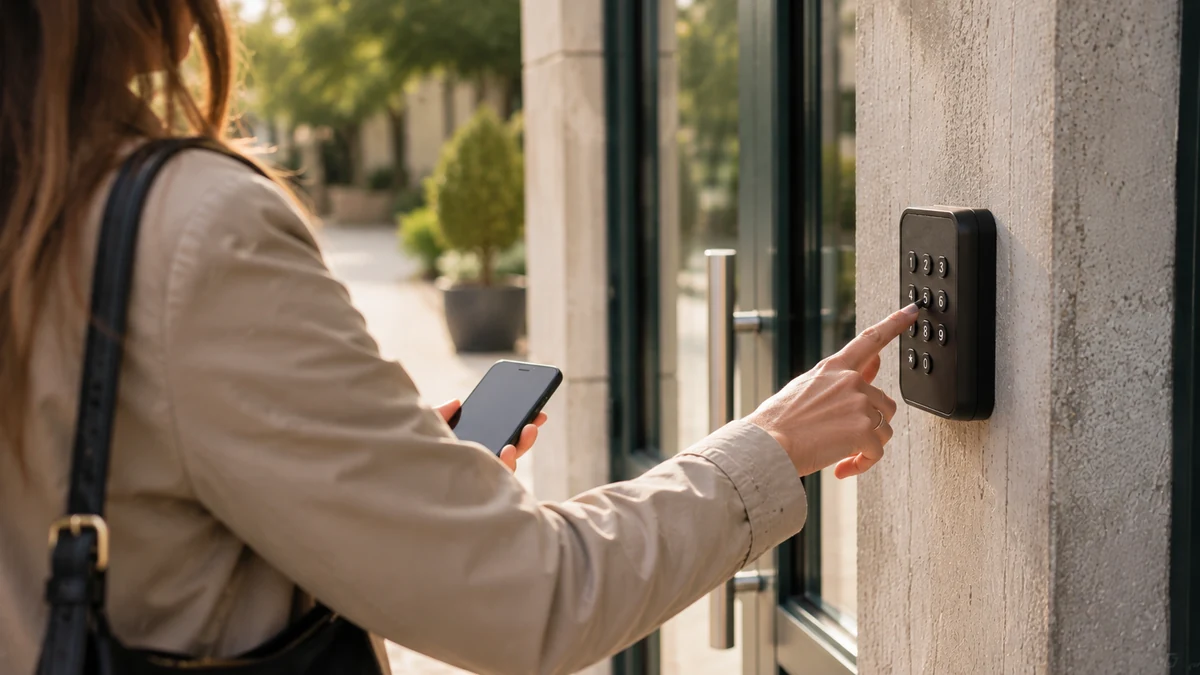
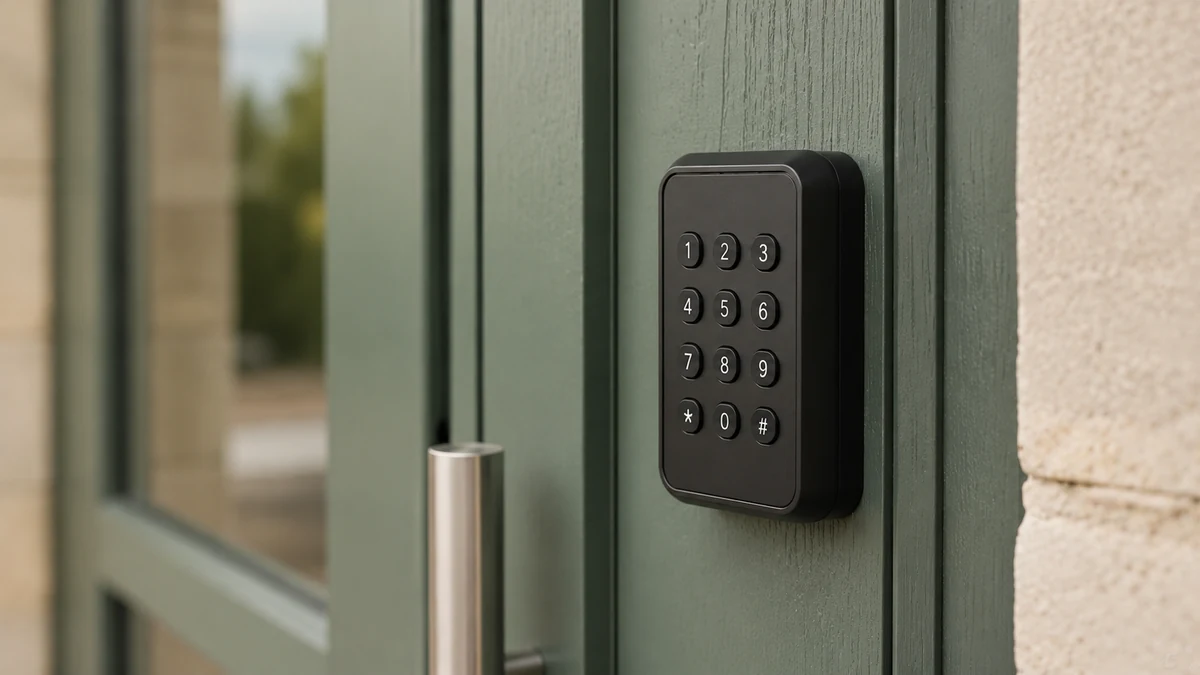
Access opens at the start time and stops at the end. No more leftover rights that someone forgets to withdraw.
A change of association contact no longer means getting an object back: the right follows the slot, not the person.
A code shared by mistake gives nothing outside its period. No lock cylinder to change, no set of copies to redo.
The time-stamped history establishes the facts without anyone being accused on the strength of memory.
The occupant books their slot, or you assign it to them. No object changes hands.
The code is sent by text message and email with the confirmation, with no appointment to arrange.
At the end of the slot, access is cut off. There is nothing to collect, so nothing to forget.
Entries are recorded with their time and can be viewed without anyone having had to write them down.
One subscription, no commitment and no equipment to replace. Your schedule, payment collection, your visitors’ access and revenue tracking in one place, all under your control from your phone. No commission on your revenue; the exact scope is agreed with you during the demo.
* Prices shown exclude VAT.
Not necessarily. ASLOT controls access equipment that can be operated remotely — gate, barrier, keypad, automatic door, turnstile, bollard — and connects first and foremost to whatever is already there. If the space only has a mechanical lock, however, the door will need to be equipped. We will tell you before any commitment.
The code only works during the booked period. Sharing it therefore does not create a permanent right: at worst, someone gets in during a slot already allocated to the person who passed on the code, and the entry is still time-stamped.
Backup codes, renewed automatically, make it possible to open even when the site has lost its connection. There is always a way in.
Yes, and it is common at the start, for the maintenance team or the emergency services, for example. The two systems coexist without any problem, and the number of keys in circulation goes down as you go along.
Yes. Service access is assigned without a booking, with its own hours. It is recorded like any other, which makes all the difference between a deliberate permanent right and a key gone astray.
It can be viewed and exported, for day-to-day monitoring as well as in the event of a dispute. The data is hosted in France.
It is often the first question that nobody knows the exact answer to. We look at your door equipment and tell you frankly what can be controlled and what cannot.