No term matches your search. Write to us at contact@aslot.fr and we’ll add it.
Access control
Access control is the set of means that determine who can enter a place, through which door and at what time. It pairs a piece of equipment (keypad, badge reader or barrier) with a set of access rights (authorised people and time windows), and keeps a time-stamped record of every entry and exit. It covers public buildings, car parks, residential buildings and harbour sites.
On the site: Access security and traceability
Association (provision of premises)
An association, in the context of the provision of a public space, is a non-profit legal entity to which a local authority lends or rents a hall, a sports hall or a sports ground for its activities. The provision may be free of charge or paid. In both cases it is based on a hire agreement, and the time slot granted appears on the schedule. Free use must still be recorded so that the accounts remain transparent.
On the site: Managing time slots for associations
Automatic barrier
An automatic barrier is a motorised device that closes off the entrance to a car park or an aire and lifts on command: badge, code, remote control, number plate recognition or remote opening. Linked to a booking, it only lets through the vehicles expected, during the paid time slot. It closes again after each vehicle and shows the actual occupancy of the spaces.
On the site: Booking and opening a car park
Automatic opening
Automatic opening is the unlocking of a door, gate or barrier triggered by a scheduled event: an authorised badge being presented, a valid code being entered, the start of a booked time slot. It differs from manual opening by someone on site. It also applies to associated equipment, such as lighting, heating or a bollard, switched on for the duration of the booking.
On the site: Booking a community hall that opens on time
Badge reader
A badge reader is a unit that reads a contactless medium, such as a card, a key fob or sometimes a phone, and checks its identifier against a list of authorisations before triggering opening. It is found in car parks, residential entrance halls, on pontoons and in coworking spaces. It suits regular users, while the keypad serves occasional visitors. The two are often combined on the same site.
On the site: Badges and codes: who gets in, when and where
Booking schedule
The booking schedule is the shared calendar that shows, for each space, the booked and free time slots. It prevents double bookings, shows real availability and serves as the basis for automatic opening. Consulted by the user to choose a time slot and by the manager to make decisions, it replaces the paper register and endless back-and-forth emails.
On the site: Booking schedule software
Certificate of insurance
A certificate of insurance is the document in which an insurer certifies that a hirer or an association has public liability cover for occupying a space on a given date. The manager usually asks for it before granting access, along with the signed hire agreement. It protects the local authority or the owner in the event of damage to the premises, the furniture or third parties during the event.
On the site: Managing a village hall
Chief executive (DGS, directeur général des services)
The chief executive (DGS, directeur général des services) is the senior officer who runs the administration of a municipality or an inter-municipal authority under the authority of the mayor or the president. They coordinate the departments, prepare the budget and lead organisational projects. They often have the final say when choosing software for booking halls and managing access to facilities, working with the town hall office, the municipal police and the technical services.
On the site: Councils and local authorities
Co-ownership regulations
The co-ownership regulations are the contractual document that organises life in a co-owned building: division into lots, intended use of the private areas, use of the common areas, allocation of service charges. They set the conditions under which a common room, a visitor car park or a shared storeroom can be booked, and at what price. Any booking rule must comply with them and, if necessary, be voted on at the general meeting.
On the site: Software for managing the spaces of a residential building
Concession holder (public service delegation)
A concession holder is the company or body to which a local authority entrusts, under a public service delegation contract, the operation of a facility: marina, car park, motorhome aire, swimming pool. It handles day-to-day operations and collects revenue from users, in return for a fee or according to the terms of the contract. The local authority remains the owner and oversees the service provided.
On the site: Ports and marinas: berths and pontoons
Condition report
A condition report is the written record of the state of a space and its furniture, drawn up at the start and again at the end of an occupancy. Comparing the two reports is the basis for returning or withholding the deposit. It can be supported by photos, the time-stamped access history and, if the site is equipped, camera images. A shared template makes the staff’s job easier.
On the site: Carrying out a condition report for a hall
Council clerk (secrétaire de mairie)
The council clerk is the employee who handles the administrative running of a small municipality: reception, civil registration, planning, accounts, preparing council meetings. In practice, they receive hall requests, keep the schedule, draw up hire agreements, collect payments through the revenue account and hand over access. A tool for booking and automated opening gives them back time for their other duties.
On the site: Community hall: 12 points to check
Coworking manager
A coworking manager is the person or company that runs a shared workspace: open-plan desks, private offices, meeting rooms, lockers, printers. They manage memberships, one-off bookings, welcoming visitors and opening the premises, often outside the hours when they are on site. Their priority is a high occupancy rate with simple day-to-day operation for members.
On the site: Coworking: booking and access for members
Deposit
A deposit is a sum requested from the hirer of a space to cover the repair of any damage or cleaning that has not been done. It takes the form of a cheque held on file, a card pre-authorisation or a sum paid upfront. Its amount is stated in the house rules or the hire agreement. It is returned after the condition report on exit if no deduction is justified, or partly withheld with a written reason.
On the site: Deposit, hire agreement and condition report: the guide
Electric strike
An electric strike is the part fitted in a door frame that holds the lock’s latch and releases it on an electrical pulse. Controlled by a keypad, a badge reader or a booking, it allows the door to be opened without a key for a few seconds, then locks it again. It is fitted to most doors of community halls, residential entrance halls and coworking premises.
On the site: Supported opening hardware
Electromagnetic lock
An electromagnetic lock is a locking device made up of a magnet fixed to the door frame and an armature plate on the door. When powered, it holds the door shut; when the power is cut, it releases it. With no moving parts, it suits glass doors, emergency exits and heavily used doors. It is controlled in the same way as an electric strike, by keypad, badge reader or booking.
On the site: Glass doors and exits: compatible equipment
GDPR
The GDPR, or General Data Protection Regulation, is the European regulation governing the collection and processing of personal data. An online booking collects names, contact details and access histories: the manager must inform the user, limit data to what is necessary, set a retention period and guarantee access and deletion on request. The CNIL, France’s data protection authority, oversees its application in France.
On the site: Data protection and hosting in France
Hire agreement
A hire agreement is the written contract by which a local authority or an owner grants an occupant temporary use of a space: an association, a company or a private individual. It specifies the premises, the dates, the price or free use, maintenance obligations, the insurance required, the deposit and the cancellation terms. Signed before occupation, it serves as the reference in the event of a dispute.
On the site: Hiring out a village hall with a hire agreement
House rules of a hall
The house rules of a hall are the text adopted by the owner or the local authority setting out the conditions of use: hours, capacity, noise level, prohibitions, cleaning, deposit, pricing by user group, responsibilities. They are given to the hirer with the hire agreement and often accepted online at the time of booking. They provide the basis for deductions from the deposit and for refusing future bookings.
On the site: Community hall management
Keypad / code lock
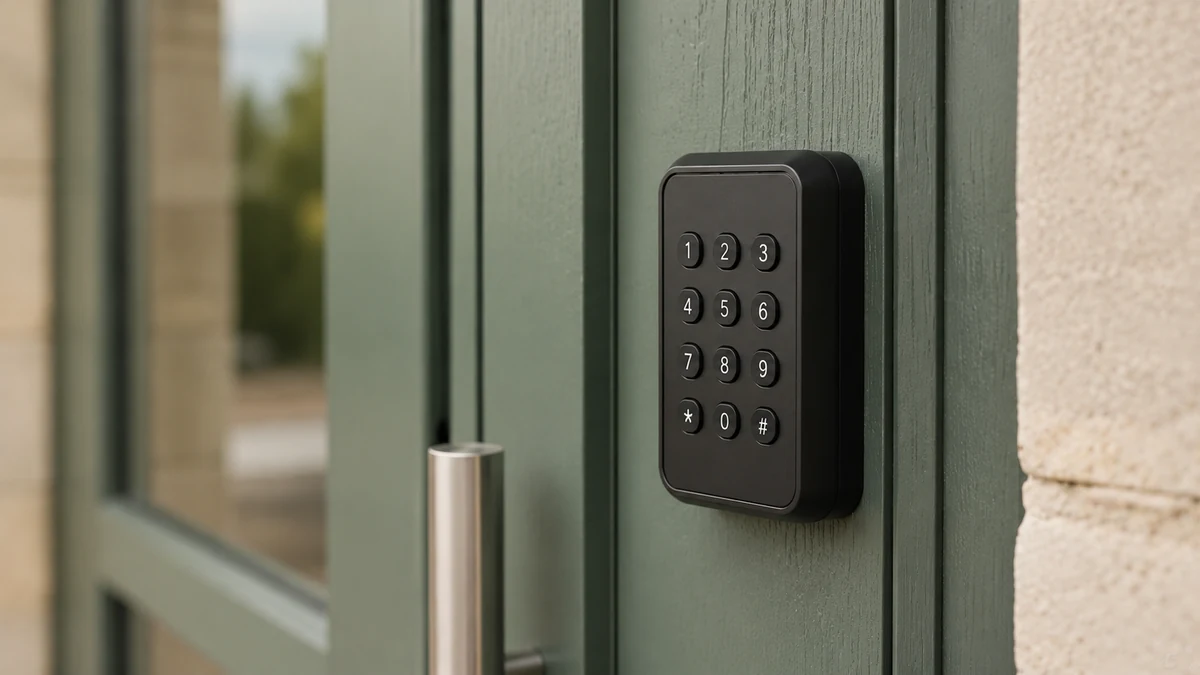
A keypad, or code lock, is a unit fixed next to a door or gate on which the user types a sequence of digits to trigger opening. It controls an electric strike, an electromagnetic lock or a motor. Depending on the model, it accepts a fixed code, several personal codes or temporary codes valid over a set time window. It is the most common equipment for self-service access to a hall.
On the site: Compatible equipment: keypads, readers, electric strikes
Managing agent
The managing agent is the appointed representative responsible for administering a co-owned building: carrying out the decisions of the general meeting, keeping the accounts, maintaining the common areas, managing contracts with service providers. They may be a professional or a volunteer. They put into practice the rules for booking common areas voted by the co-owners and manage the badges and access codes of residents, contractors and visitors.
On the site: Booking common areas: the guide
Municipal sports hall (time slots)
A municipal sports hall is an indoor sports facility owned by a municipality and made available to schools, clubs and sometimes private individuals, through weekly or one-off time slots. Slots are shared out among associations each season, and any slots left free can be opened for booking. Access by code or badge avoids keys being passed from club to club.
On the site: Booking a sports hall time slot
One-time code
A one-time code is a sequence of digits given to a user for a specific booking and valid only during the booked time slot. It doesn’t open the door before the start time and stops working after the end time. Each booking receives its own code, which avoids a shared code known to everyone being passed around and keeps the entry history easy to read.
On the site: Online booking with access control
Online booking
Online booking means a user choosing a space and a time slot on a website, providing their contact details, accepting the terms and paying, without any letters or trips. It is confirmed immediately and entered in the schedule. It applies to halls, sports halls, offices, parking spaces, berths, motorhome pitches and storage units, from a computer or a phone.
On the site: Room booking software
Payment receipt
A payment receipt is the document given to the user after payment, showing the date, the amount, the space and time slot paid for, and the identity of the payee. It allows the user to prove payment and the manager to match each payment to a booking. For a local authority, it is added to the documents sent to the Treasury accountant with the revenue officer’s remittance.
On the site: Receipts and supporting documents for the Public Treasury
Permanent badge
A permanent badge is an identification medium, such as a card or key fob, assigned on a long-term basis to a person to open one or more access points. Its holder is a regular user: a resident of a residential building, a car park subscriber, a coworking member, a year-round boat owner. The manager decides which doors and hours are authorised and can deactivate the badge at any time, for example when the holder leaves, without having to get it back.
On the site: Managing keys, badges and access codes
Pricing by user group
Pricing by user group is the price list that sets a different price depending on who is applying: local association, resident of the municipality, non-resident individual, business. It is voted on by the elected assembly and published. It may provide for free use by certain associations, which must then be valued and recorded. The right rate applies automatically when the applicant’s group is identified at booking.
On the site: Village hall: booking at the right rate
Procedure exemption threshold (public procurement)
The procedure exemption threshold is the amount, excluding VAT, below which a public buyer can award a contract without prior advertising or competitive tendering, while still choosing a relevant offer and without systematically contracting with the same supplier. A subscription to booking software is usually below this threshold
On the site: Price and terms
Public revenue account (régie)
A public revenue account (régie de recettes) is the arrangement that authorises a local authority employee, the revenue officer, to collect certain public revenue on behalf of the Treasury accountant, as an exception to the principle that the authorising officer and the accountant are kept separate. It is created by council resolution or by decision of the authorising officer, with the accountant’s binding approval. The hire of halls, spaces or pitches often goes through a revenue account.
On the site: Collecting hire payments through a revenue account
Public Treasury (trésorerie)
The trésorerie, now called the service de gestion comptable (public accounting service), is the Treasury accountant’s office that keeps a local authority’s accounts, collects its revenue, pays its expenditure and checks the revenue officers’ transactions. The revenue officer periodically pays in the sums collected, along with the supporting documents. Booking and payment exports are used for this reconciliation.
On the site: Exports for the Treasury accountant
Refund / cancellation
A refund is the full or partial return of the sum paid when a booking is cancelled. Its conditions depend on the house rules or the hire agreement: notice period before the time slot, fees withheld, force majeure. For a local authority, refunding revenue that has already been collected follows a specific accounting procedure. A clear cancellation policy, accepted online at the time of booking, limits disputes.
On the site: Booking a space online
Residents’ council
The residents’ council is the body of a co-owned building elected by the general meeting to assist and oversee the managing agent. It is made up of volunteer co-owners. For bookable common areas, such as a common room, bike store, visitor parking space or laundry room, it gives its opinion on the rules of use, opening hours and any fees, then monitors how they are applied with the managing agent throughout the year.
On the site: Common areas in residential buildings
Revenue order (titre de recette)
A revenue order is the instrument by which a local authority’s authorising officer establishes a debt, sets its amount and orders its recovery by the Treasury accountant. It makes the sum payable by the debtor. For the hire of a space, it is used when payment has not been collected through the revenue account, for example for an annual hire agreement or a deduction from a deposit that remains unpaid.
On the site: Revenue account or revenue order: collecting hire payments
RGAA
The RGAA (Référentiel général d’amélioration de l’accessibilité) is the French framework that sets the criteria a website or online service must meet to be usable by people with disabilities. Public services and their providers must publish an accessibility statement showing their level of compliance. A booking form offered by a local authority falls within this scope.
On the site: Accessibility statement
Self-service access
Self-service access is the ability for the user of a booked space to get in on their own at the agreed time, with a code, a badge or a recognised number plate, without a key being handed over in person. Access is valid for the length of the booked time slot and ends when it does. This type of access applies to halls, sports halls, car parks, offices, marina berths, motorhome aires and storage units.
On the site: How self-service access works
Self-service access control
Self-service access control is access control in which entry rights come directly from bookings: as soon as a time slot is booked and paid for, the user receives a means of opening the door, valid for that time slot only. The manager has no key to hand over and no appointment to arrange. At the end of the slot, the right expires automatically and the space becomes available again for the next booking.
On the site: Booking only or booking with access?
Service bollard (motorhome aire)
A service bollard is the equipment at a motorhome aire that supplies water, electricity and sometimes waste water disposal, in return for a payment or an entitlement included in the stay. It usually works with a code, a token or a card. Combined with the booking of the pitch, it allows travellers to arrive at night and use the services as soon as they have settled in.
On the site: Motorhome aires: booking and services
Time slot
A time slot is the period during which a space is booked by a user: an evening in a village hall, two hours in a sports hall, a night on an aire, half a day in a meeting room. It has a start time and an end time. The schedule prevents two bookings from overlapping on the same slot, and self-service access matches this duration exactly.
On the site: Organising a hall’s schedule
White label
White label means providing an online service under the manager’s own visual identity: their name, logo and colours, and sometimes their domain name. The user booking a room or a parking space sees the council, the managing agent or the operator, not the software vendor. This approach builds trust and fits in with the visual identity of the organisation’s official website.
On the site: The ASLOT platform
Your questions
What is the difference between online booking and self-service access control?
Online booking deals with the time slot and payment: the user chooses a date, accepts the terms and pays. Self-service access control deals with the door: the user receives a code or has their badge activated for that time slot and gets in on their own. Booking software on its own still leaves the key handover to be organised; software that links booking and access removes this step and records every entry.
Can a council collect hall hire payments without a public revenue account?
Yes. Without a revenue account, the council issues a revenue order and the Treasury accountant recovers the sum from the hirer, before or after the occupancy depending on the hire agreement. A revenue account, on the other hand, makes it possible to collect payment immediately, at the time of booking, which reduces unpaid bills and reminders. In both cases, online payment is still possible, whether to settle a revenue order or to collect payment through the revenue account.
Does the access code replace the hire agreement and the condition report?
No. The code or badge replaces the key handover, not the legal framework. The hire agreement sets out rights and obligations, the deposit covers any damage, and the condition report records the state of the hall before and after. What automated access adds is a time-stamped history of entries and exits, which helps date an incident and makes the exit condition report more objective.
Who sets the price of a community hall and free use for associations?
The municipal council, by council resolution. It adopts the pricing by user group (residents, non-residents, associations, businesses), as well as the deposit amount and the cancellation terms. Free use granted to certain associations is a council decision; it must be recorded so that it appears in the accounts as a benefit in kind. The hall’s house rules restate these rules and are given to the hirer with the hire agreement.
Does room booking software fall under public procurement?
Yes, any purchase by a local authority from a supplier is a public contract within the meaning of the French Public Procurement Code. Below the procedure exemption threshold, the buyer has no obligation to advertise or run a formal competitive tender: they choose a relevant offer, make sure public money is used properly and avoid systematically contracting with the same supplier. A monthly subscription to booking software generally falls within this framework.
Can’t find a term?
Write to us: we add the terms you come across in your booking and access projects.