

What a community hall hire agreement must contain
A hire agreement is the document by which the municipality entrusts the use of premises to an occupant, for a set period and on set terms. It identifies the parties, describes the purpose and the period, sets the price or free use, allocates responsibilities and requires insurance. Without it, the first damage is argued over from memory.
Identification details
The agreement names the municipality, represented by the mayor or a deputy mayor with delegated authority, and the occupant: an individual with their address, or a legal entity with its representative. It specifies the hall and the ancillary areas included, such as the kitchen, toilets, covered outdoor area and car park. It refers to the resolution setting the rates and the deposit, and appends the house rules.
Duration and purpose
The period is written with a start day and time and an end day and time. These limits define the occupant’s responsibility and the period during which the door opens for them. The purpose is described precisely: family meal, general meeting, training session. The number of people expected is checked against the hall’s capacity.
Price, free use and deposit
The amount due is the one in the rate grid voted for the user group concerned: local association, resident, non-resident. Free use is still covered by an agreement, with the same liability clauses. For associations, trade unions and political parties, Article L2144-3 of the French General Local Authorities Code provides for the use of municipal premises under conditions set by the mayor, with the municipal council setting any contribution due where appropriate. The page on free use by associations details the record to keep of these occupancies.
Responsibilities and insurance
The occupant is responsible for any damage occurring during the period, for compliance with the house rules and for the safety of the people they host. The municipality is responsible for the condition of the building and its facilities. The agreement requires a liability insurance certificate, provided before access. It prohibits subletting and sets out the grounds for termination: cancellation by the occupant within the set deadline, or cancellation by the municipality on public interest grounds.
Village hall hire deposit: amount, collection through the revenue account, return, withholding
A deposit is a sum requested from the occupant to guarantee that the hall is put back in good order and the agreement complied with, and it is returned if no breach is found. In a municipality, the amount is set by a municipal council resolution and the way it is handled depends on the instrument establishing the public revenue account.
The amount, set by resolution
The deposit is voted at the same time as the rates, hall by hall. The municipal council can set a single amount or several: hall, cleaning not done, equipment. The amount stays proportionate to routine damage, since a revenue order can cover any excess.
Collection, through the revenue account
There are two practices: holding a cheque without cashing it, returned after the condition report on exit, or having the revenue officer collect the sum and then refund it. The choice is the municipality’s and is set out in the instrument establishing the revenue account, which lists the authorised revenue and the accepted payment methods. The rules for advance and revenue accounts (régies) are published by the DGCL, the French directorate general for local authorities. The collecting hall hire payments through a revenue account page describes what the municipality sets up with its Treasury accountant at the start.
The refund
The deposit is returned after the condition report on exit, within the period set by the agreement. A cheque that was held is handed back; a sum that was cashed is refunded by a payment order from the authorising officer.
The deduction
In the event of damage, cleaning not done or missing equipment, the municipality withholds all or part of the deposit. The decision is justified by the condition report on exit, the photos, the access history if the municipality has one, and a repair quote. The occupant is informed in writing. If the cost exceeds the deposit, a revenue order is issued for the excess.
Community hall condition report: the four-step template
A condition report is the written record of the condition of a hall and its equipment, drawn up on the occupant’s entry and exit, with both parties present. A community hall condition report template works in four steps: entry, exit, photos, signature.
The condition report on entry
It is drawn up before access is handed over, from a checklist specific to the hall: floors, walls, doors and glazing, lighting, heating, toilets, kitchen and appliances, inventoried crockery and equipment, tables and chairs counted, fire extinguishers and emergency exits, cleanliness. Each line is given a condition (good, worn or damaged) and a comment if needed. The report states the date, the time and the people present.
The condition report on exit
It goes through the same list after the hall is handed back. Any difference from the report on entry is noted, costed if possible, and linked to the period of occupancy. When several occupants follow one another in the same day, knowing who went in and at what time attributes any damage to the right time slot. A condition report backed by the access history answers that question without a member of staff having to note the times.
Photos
Dated photos are taken at both stages, from the same angles, and attached to the booking file. A photo of a scratched floor on entry prevents an unjustified deduction; the same photo on exit supports a justified one. If the hall has cameras that users have been told about, the footage for the time slot completes the file, in compliance with the rules on retention.
Signature and the presence of both parties
The condition report is drawn up in the presence of the occupant and a representative of the municipality, and signed by both. If the occupant does not turn up at the end, the agreement provides for the municipality to draw up the report alone and send it to them, with a deadline for comments. An unsigned condition report loses most of its weight in a dispute over the deposit.
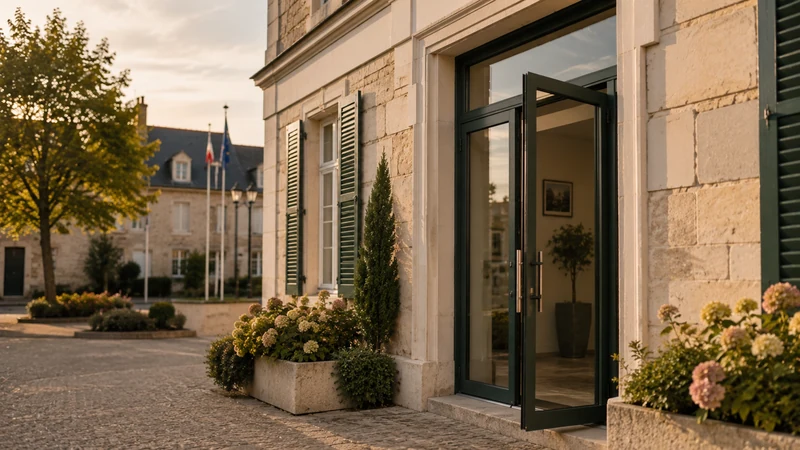
The village hall house rules
The village hall house rules set the rules of use that apply to all occupants. The agreement refers to them and the occupant accepts them when booking. They are adopted by the municipal council, displayed in the hall and published on the municipality’s website.
What it contains
- Hours, including the latest end time for evening events and the time by which the hall must be handed back.
- Capacity and a reminder that the hall is a building open to the public, with the evacuation obligations that come with it.
- Noise: volume levels, windows closed after a set time, consideration for neighbours.
- Safety: no smoking, no changes to the electrical installations, nothing hung on the walls or ceilings.
- Cleaning and waste: what the occupant must leave clean, where to put sorted waste, and what remains the municipality’s responsibility.
- Equipment: inventory, putting things away, reporting breakages.
- Prohibitions: subletting, use other than the declared purpose, fireworks.
- Penalties: deduction from the deposit, refusal of future hires, termination.
What the house rules are not
They do not set the rates or the deposit, which are a matter for the resolution, nor the conditions specific to a given hire, which are a matter for the agreement. The community hall booking and access in 12 points guide places these documents within the full project, from the catalogue of halls to access control.
How does software digitise the whole process?
Booking software digitises the hire agreement, the deposit, the condition report and the house rules by linking them to the booking. The agreement is generated from the details entered by the occupant and signed online before access. The house rules are accepted at the time of booking. The deposit is tracked from request to return. The condition report relies on dated facts: the access history and, if the hall is equipped, camera footage.
The agreement and the house rules, before access
The occupant enters their identity, user group, purpose and time slot. The agreement uses these details, appends the house rules and the insurance certificate, and is signed online. Until it is signed and the payment due has been received, access is not opened.
The deposit, tracked with the booking
Whatever method is agreed with the Treasury accountant, the booking keeps a record of the deposit requested, received, returned or withheld. The revenue officer has a summary by period and the Public Treasury an export. The user receives a payment receipt.
The condition report, backed by facts
Access control records entries during the booked time slot. On Monday morning, the person who finds damage knows which time slot was in progress, who had booked it and at what time the hall was opened. Reports and photos go into the booking file.
Access, limited to the time slot
The occupant’s code or badge works during the period of the agreement and stops working when it ends, with no key to hand over or collect. The municipality gets all of this for a subscription from €59 excl. VAT per month, with no commitment and no commission on payments, with the exact amount set during the demo.
Outline of a hire agreement, section by section
The outline below brings together the sections of a community hall hire agreement, in the order in which they are read.
Your questions
Can a municipality ask for a deposit when hiring out its village hall?
Yes. The municipality sets a deposit through a municipal council resolution, at the same time as the hire rates. It can set several, for example one for damage and one for cleaning not done. The deposit is requested before access is handed over, stated in the hire agreement, and returned after the condition report on exit if no breach is found.
Who sets the deposit amount and the rates for a community hall?
The municipal council, by resolution. The resolution sets the rates for each user group (local association, resident, non-resident), any free use and the deposit amount, hall by hall. The mayor applies it and signs the agreements. The booking software takes this rate grid exactly as it is, with no case-by-case decisions at the counter. Any change requires a new resolution, then an update to the booking page and the agreement.
Should the deposit be cashed, or the cheque simply held?
Both practices exist and the choice is the municipality’s, made with its Treasury accountant. A cheque held without being cashed is returned after the condition report on exit. A sum collected by the revenue officer is refunded by a payment order from the authorising officer. The instrument establishing the public revenue account (régie) must provide for the deposit and the accepted payment methods. The revenue officer must be able to account for every transaction: the booking keeps a record of the deposit requested, received, returned or withheld.
Is a condition report mandatory for a community hall?
No legal text requires one for a one-off hire, but without it the municipality can neither withhold the deposit with stated reasons nor prove the hall’s initial condition. The hire agreement makes it contractual: a report on entry before access is handed over, a report on exit after the hall is handed back, signed by both parties, with dated photos. When several occupants follow one another in the same day, the timestamped access history attributes any damage to the right time slot.
Is an agreement needed for an association that uses the hall free of charge?
Yes. Free use changes nothing in terms of responsibilities. The agreement identifies the association and its representative, sets the time slots, often recurring over the season, requires an insurance certificate and refers to the house rules. It states that the hall is provided free of charge, under the municipal council resolution. The occupancy is recorded like any booking, which gives the municipality a picture of how much each association actually uses the hall.
What should be done if damage is found after a hire?
Carry out the condition report on exit, with dated photos, and compare it with the report on entry. Identify the time slot and the occupant, from the booking and the access history. Inform the occupant in writing, with the report and a repair quote. Decide whether to withhold all or part of the deposit, with stated reasons. If the cost exceeds the deposit, issue a revenue order for the excess. Keep the file with the booking.
Official references
Read next
- Community hall booking and access: 12 points to pin down before choosing Local authorities
- Coworking booking software: 10 points to pin down (rooms, desks, 24/7 access) Coworking
- Running a municipal motorhome aire: booking, payment, barrier Motorhome aires
- Espace sur Demande (ANCT) or ASLOT: free or complete, which should you choose for your halls? Comparison
See ASLOT applied to your case
Thirty minutes, no commitment, to check what the platform changes for your spaces and equipment.