
Answering availability enquiries
It is the biggest task by volume, and the easiest to remove: an up-to-date public page can be checked at any hour, including when the enquiry comes in on a Sunday.
Managing a rented space is not one task: it is a collection of small tasks which, put together, take far more time than you would imagine. The schedule, the keys, the associations’ slots, the condition reports, the cheques. Each one is handled separately, and each one can disappear separately.
Updated 30 August 2026

Ask someone who manages a community hall how much time it takes them, and they will tell you “not much”. That is not wrong: none of these tasks takes more than ten minutes. It is how many there are and how scattered they are that costs you. A call here, a cheque there, a key to collect, a schedule to correct, a dispute to settle three weeks later.
This time has another flaw: it is unpredictable. It comes on a Friday at 17:00, it comes during the holidays, it comes when the person who knows isn’t there. That is what makes it impossible to absorb, and it is often what leads people to hire out less rather than hire out better.
Our approach is not to add a tool on top of the way you work, but to remove the tasks one by one. Each page below covers a specific task and explains what becomes of it once it is automated.

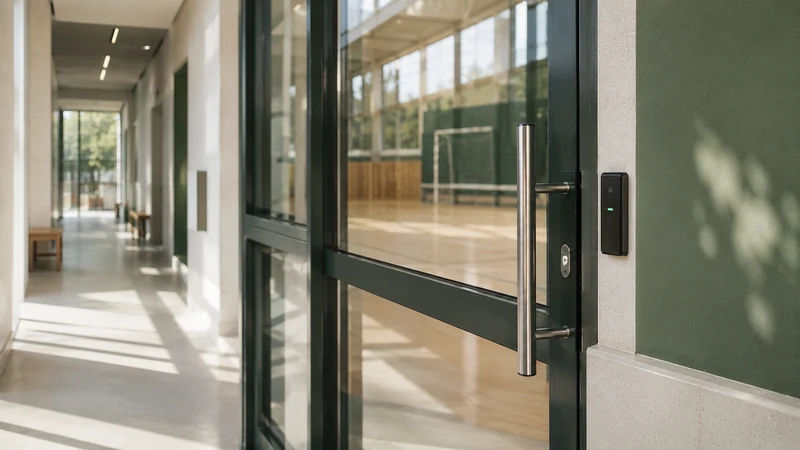
The binder, the phone calls and the last-minute cheque: what becomes of each once the hall is online.
Read the page → 📆 ScheduleThe village hall schedule day to day: clashes, recurring bookings, the season, cancellations and sharing between staff.
Read the page → 🔑 Keys & accessA key gets lent, gets lost and never tells you who went in. What changes with an access right tied to the time slot.
Read the page → 🤝 AssociationsA user group in its own right: free use possible, recurring slots, and use still recorded.
Read the page → 🧾 Condition reportsDisputes are settled on time-stamped facts rather than on two people’s memories.
Read the page → 🏦 Payment collectionThe reference guide to public revenue accounts (régie) and online payment for hall hire: who collects, who issues the revenue order, which documents, which deposits.
Read the page → 🗺️ Self-storage centreRunning a self-storage centre as a pair, with an operator on site and a manager in the office: tasks, facility events and settings, across one or more sites.
Read the page → 🔁 Arrears and direct debitsPayment follow-up that runs by itself: direct debit set up at booking, a polite reminder, back to normal on payment, extra time possible.
Read the page →It is the biggest task by volume, and the easiest to remove: an up-to-date public page can be checked at any hour, including when the enquiry comes in on a Sunday.
Handing over, collecting, replacing, changing a lock cylinder. An access right tied to a time slot removes the object and all the tracking that goes with it.
Payment comes before access. So there are no more cheques outstanding, and no awkward decision to make about a hire that has already taken place.
Who went in, when, for how long, for what amount: the answer already exists and can be looked up, instead of being pieced together.
Calls about a date, handing over the key, collecting payment, chasing it. It is always the same four or five actions.
Rates by user group, durations, open periods, cancellation terms. What used to be applied from memory becomes a setting.
Every booking follows it without anyone having to decide. You only step in for the cases it did not foresee.
Occupancy, revenue and access are recorded along the way. Tracking is no longer a job; it is an outcome.
One subscription, no commitment and no equipment to replace. Your schedule, payment collection, your visitors’ access and revenue tracking in one place, all under your control from your phone. No commission on your revenue; the exact scope is agreed with you during the demo.
* Prices shown exclude VAT.
No, and it is rarely a good idea. Most managers start with the task that costs them the most, often availability or keys, then expand. A single space open for booking is enough to get started.
Quite the opposite. A booking can be created, edited, moved or cancelled from the dashboard at any time. What disappears is the repetitive work, not your power to decide on special cases.
Most of it happens during setup, which our team carries out with you, remotely. After that, everyday use is limited to checking, since there is no longer any daily data entry.
Yes. Both feed the same calendar, with the same pricing rules and the same history. The counter remains available for those who prefer it.
It stays as it is; we don’t rewrite the past. The history built up from setup onwards, however, can be used straight away, with no re-keying.
No. The subscription is all-inclusive, with no commission. Your exact price is worked out with you during the demo.
In thirty minutes, we pinpoint the two or three tasks that cost you the most today, and show you what they become once the rule is written.