
Recurring bookings set once
An association’s weekly slot is declared just once and covers the whole year. You don’t re-enter it every term and nobody books over it.
A multi-purpose hall has a drawback no other hall has: it belongs to everyone. The club on Monday, the school on Tuesday, the choir on Thursday, a family meal on Saturday. So the question isn’t how to fill it; it’s already full. It’s how to keep a calendar that four different user groups read without treading on each other’s toes.
Updated 30 August 2026
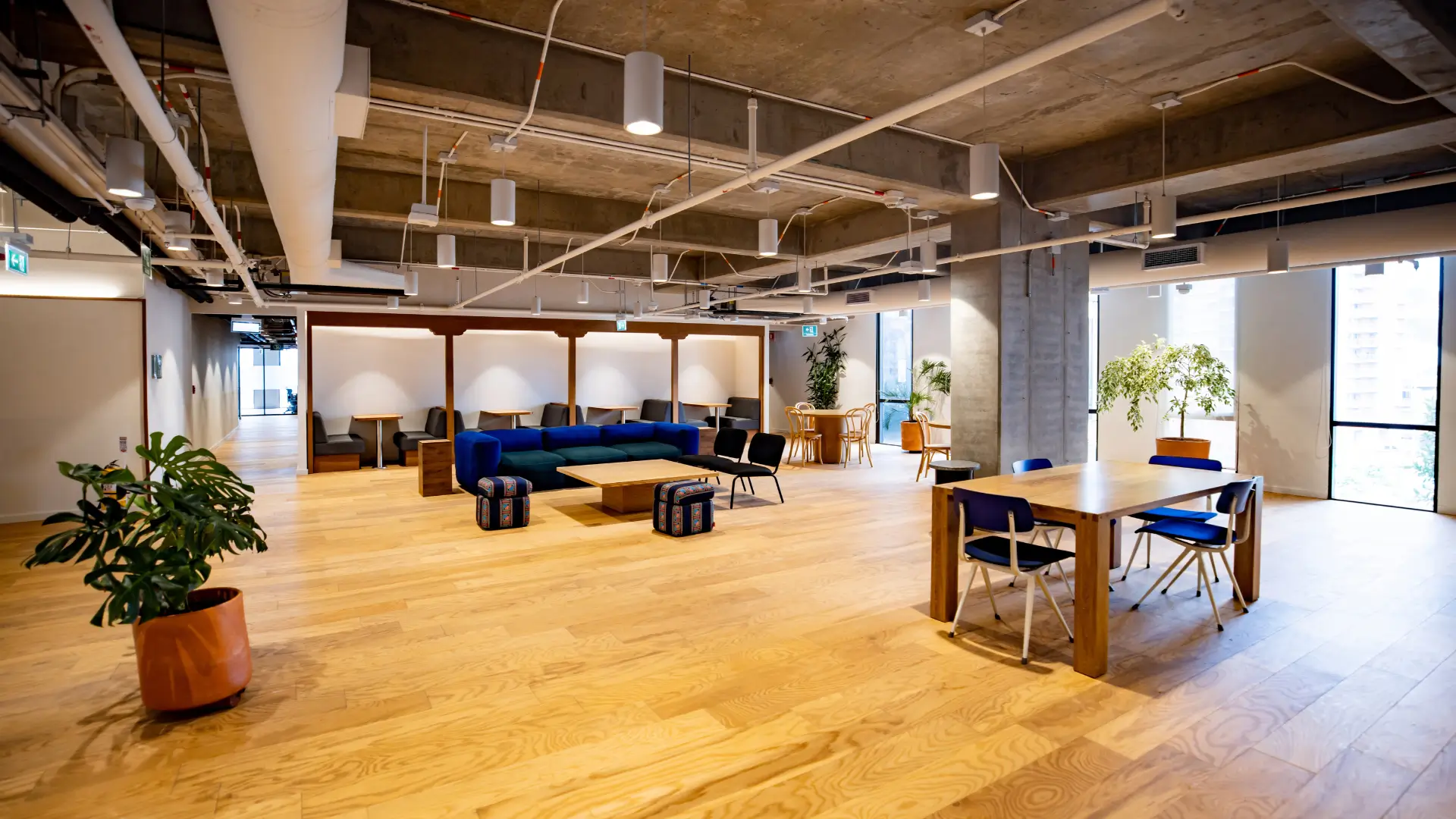
The difficulty with a multi-purpose hall is first of all arithmetic. The recurring slots of associations fill the week, schools are added on fixed time windows, and one-off hires fit into whatever is left. Each of these user groups has its own contact person, its own price and its own way of booking: one by email, another by phone, the third by dropping in at the town hall.
As a result, the schedule exists in several copies: a spreadsheet, a wall planner, the memory of the person in charge. As long as they all say the same thing, all is well. The day they differ, two groups turn up at the same door, and it’s always a Saturday.
Putting the hall up for online booking isn’t about adding one more tool. It’s about getting rid of the copies. Only one calendar remains, public for whatever needs to be, and it’s the only one that counts.

An association’s weekly slot is declared just once and covers the whole year. You don’t re-enter it every term and nobody books over it.
Local association, school, resident, non-resident, business: each user group has its own price, including €0, without duplicating the hall’s listing.
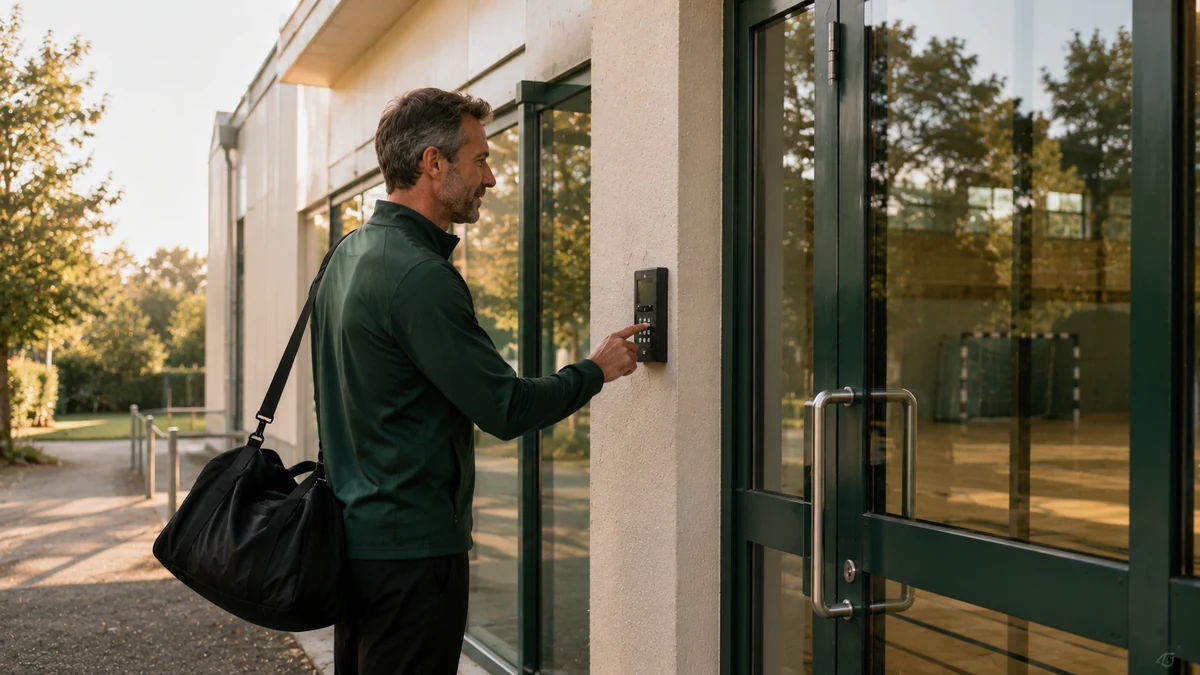
Each group receives its own code, valid for its time window. A shared hall no longer means sharing a bunch of keys.
At last you can see which time windows are full and which are never used. That’s often what decides whether new slots are opened.
Schools and associations fill the calendar first with their recurring time windows. That base no longer moves from one week to the next.
Whatever isn’t taken becomes bookable online. The public page only shows the time windows that are genuinely available.
The price depends on the user group making the booking. An association can pay €0 while a non-resident pays the full price, for the same slot in the same venue.
The code belongs to the slot. It opens at the scheduled time, stops at the end, and the next occupant has their own.
One subscription, no commitment and no equipment to replace. Making a space bookable, collecting payment, opening it at the right time and tracking what it brings in: it’s all in the same subscription. No commission on your revenue; the exact scope is agreed with you during the demo.
* Prices shown exclude VAT.
There is only one calendar. As soon as a booking is confirmed, the slot disappears from the open dates, whether the next request comes in through the public page or is entered internally.
Yes. A recurring booking is declared once and occupies the calendar for the whole period you want. If a session is skipped, for example during the holidays, you cancel that occurrence without breaking the series.
Yes, provided they are set up as separate spaces. Each then has its own calendar, its own price and its own access. That’s what lets you hire out the main hall without opening the kitchen.
No, no sign-up or app is needed to book; everything goes through the browser. It’s the pricing and access rules that distinguish user groups, not a requirement to have an account.
The next group’s code works at its scheduled time; the previous group’s no longer works. Overrunning is still physically possible, but it becomes visible: the history shows the actual entry times.
Yes. A time window can be closed to booking without disappearing from the calendar: it shows as unavailable on the public side, and the reason remains visible on the management side.
Show us your current slots: we’ll give you back the same week, set up once and for all, with each user group’s prices applied automatically.