
Control the barrier
Opening comes from the booked stay and ends with it. That’s what makes it possible to welcome visitors late in the evening, every day of the season, without preparing each arrival.
Motorhome aire management software has to link three things: booking the pitch from the road, payment before entry, and control of the barrier and service bollard during the stay. For a municipality, it has one more advantage: it’s the same platform, the same public revenue account (régie) and the same dashboard as for the village hall. This page describes what the software must do, and why it makes sense to pool it with your other facilities.
Updated 8 September 2026
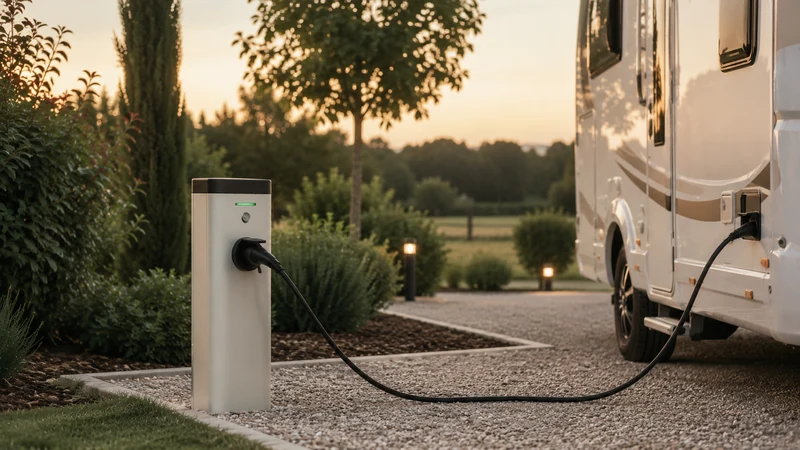
On an aire, booking isn’t the real issue. The real issue is that an arriving vehicle can get in, use the services and leave at any time. That moment often falls at 22:00 or 23:00, on a day when nobody is passing by the aire. Software that stops at the list of bookings leaves that moment entirely to the municipality.
So the barrier has to open at the right time, water and electricity have to be available for the right stay, and none of it must work for a vehicle that hasn’t paid. The booking triggers payment, payment grants the right to enter, and that right controls the equipment during the stay. Every break in this chain costs a lost overnight stay or a phone call to make.
For a municipality that already has a village hall or a sports hall, the aire is just one more space on the same platform. Same revenue account, same dashboard, same staff. The revenue officer finds the overnight stays and hall hires in the same summary. It is this pooling that makes the aire simple to manage for a small municipality.
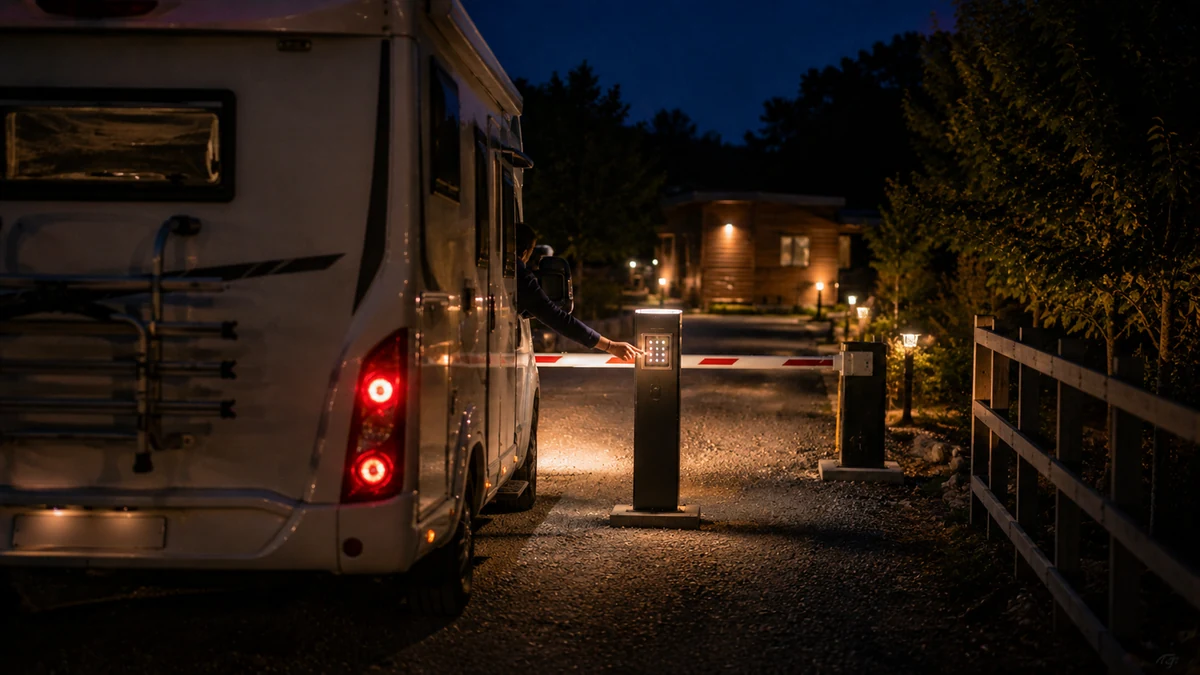

Opening comes from the booked stay and ends with it. That’s what makes it possible to welcome visitors late in the evening, every day of the season, without preparing each arrival.
Water, waste disposal and electricity follow the stay, depending on what the aire offers. No more tokens or cash to handle, no more bollard to top up.
Rates are set by period: high season, shoulder season, weekends, each with its own prices. The approved rate table applies automatically.
Occupancy, revenue and barrier activity can be read from any browser, on the same screen as the village hall. Going on site becomes a choice again.
From a phone, on the aire’s public page, with no account or app. What is shown is genuinely free for the chosen dates.
The amount matches the length of the stay and the period. It goes into the municipality’s revenue account. Without it, the pitch stays open to another vehicle.
The code received opens the barrier during the booked period, whenever the vehicle turns up, even at 23:00.
Whatever the aire offers is switched on for the duration of the stay and switched off at the end. The next stay starts with an aire that’s ready.
Because a municipality doesn’t have two revenue accounts, two town hall offices and two Public Treasury offices. The village hall and the motorhome aire are two different spaces with the same logic: a booked time slot or stay, payment before access, a door or barrier that opens during the booked period, and a history. Managing them on the same platform avoids multiplying tools, accounts and training.
In practice, the aire appears in the dashboard alongside the village hall and the sports hall. The same staff access it with the same permissions. The revenue officer finds overnight stays and hall hires in a single summary. A municipality that has already opened its hall for booking adds its aire in a few days; one that starts with the aire can add the hall later. The page motorhome aires run by municipalities presents this use case, and the guide running a municipal motorhome aire details the decisions to make before opening.
Overnight stays at a municipal aire are public revenue, just like village hall hires. They are collected within a public revenue account (régie), under the control of the Treasury accountant. If the municipality already has a revenue account for its halls, the act establishing it can be extended to the aire; if not, a single revenue account is created for all the facilities open for booking.
Online payment fits into this revenue account, in line with the requirements for public revenue accounts. Each paid overnight stay is linked to the stay, the pitch and the rate period. The revenue officer has a summary by period and the Public Treasury receives an export. The page collecting payment through a public revenue account describes this process in detail. A motorhomer who extends their stay pays for the extension online; without that payment, the barrier no longer opens for them once the original time slot has ended.
An aire doesn’t run at the same pace all year round. Full in July and August, busy at weekends in spring and autumn, almost empty in January. The rate table approved by the municipal council reflects this pattern: high season, shoulder season, low season, sometimes a weekend rate. The software must apply this rate table on its own, according to the dates of the stay, without a staff member having to choose the rate for each booking.
The season is set once a year, at the same time as the village hall’s. Closure periods, for winterising the bollard or for works, are declared in the same way and remove the aire from the public page for as long as needed. A stay that spans two rate periods is calculated night by night. The motorhomer sees the total amount before paying; the revenue officer finds the period applied on each line.
The booked and paid stay controls two pieces of equipment. The entrance barrier opens with the code received, during the booked period, and no longer opens afterwards. The service bollard provides water, waste disposal and electricity depending on what the aire offers and what the stay includes. At the end of the stay, the services stop and the exit barrier lets the vehicle out.
The platform adapts to the hardware in place when it can be controlled: barrier, bollard, lighting. Replacement is the exception. If a piece of equipment can’t be controlled, the hardware needed is quoted separately and communicated before ordering. Compatibility is checked for your aire during the demo. A vehicle that turns up without a booking can book on the spot from a phone, on the same public page, and get in within a minute. The page booking a motorhome aire, even at 23:00 describes this journey from the traveller’s side.
An aire earns most of its revenue late in the day. Motorhomers drive during the day and look for a pitch in the late afternoon or evening, often after 20:00, sometimes at 23:00. At those times, there is nobody at the aire or at the town hall. As long as entry depends on someone coming by the next morning or on a temperamental ticket machine, some of the overnight stays never turn into revenue.
With a stay booked and paid for from the road, an arrival at 23:00 goes just like one at 15:00. The vehicle turns up, the code opens the barrier, the services are available. The next day, the dashboard shows the arrival, the time and the payment. If the aire loses its connection, backup codes still make it possible to open. The municipality keeps its aire available all season, at any hour, and its staff step in for special cases rather than for every arrival. The pricing and terms page explains what the subscription includes and what may be added for hardware.
One subscription, no commitment and no equipment to replace. Booking, payment collection, access and tracking in a single piece of software, with no add-on modules or premium edition. No commission on your revenue; the exact scope is agreed with you during the demo.
* Prices shown exclude VAT.
That’s the first thing we check. The platform connects to the equipment in place when it can be controlled remotely: barrier, service bollard, lighting. Replacement is the exception. If a piece of equipment can’t be controlled, the hardware needed is quoted separately and communicated before any order. Compatibility is checked for your aire during the demo.
Yes, and that’s the main advantage for a municipality. The aire, the village hall, the sports hall or a car park are separate spaces in the same dashboard, each with its own rates, availability and equipment. The same staff access them with the same permissions. The revenue officer finds all the revenue in a single summary, and the Public Treasury receives a single export.
The motorhomer extends online, from their phone, just as for a booking. The amount is calculated on the nights added and the rate period. Until the extension is paid, access is no longer valid at the end of the original stay. The municipality doesn’t have to go and chase payment on site, and the revenue officer finds the extension linked to the original stay.
Yes. Rates are set by period: high season, shoulder season, low season, and weekends if the municipality wishes. The approved rate table applies automatically, according to the dates of the stay, and a stay that spans two periods is calculated night by night. The motorhomer sees the total amount before paying. Closure periods are declared in the same way and remove the aire from the public page.
Backup codes make it possible to open the barrier even when the site is no longer communicating. A motorhomer who has booked is never left stuck outside a closed aire. When the connection returns, the history is completed and the dashboard shows the actual status of the aire again. Connection quality is one of the points checked before setup.
No. The subscription starts at €59 excl. VAT per month, with no commitment and no commission on payments. The exact price is set during the demo, based on the municipality’s actual spaces and equipment. Barrier or service bollard hardware, if it needs to be added, is quoted separately and communicated before ordering.
We look at your existing equipment and show you the complete journey of a stay, from booking on the road to the service bollard, on the same screen as your village hall.