
| Step | Online, by the boat owner | By the harbour team |
|---|---|---|
| Stopover request | Dates, length, beam, draught | Check borderline cases: large multihull, deep draught |
| Visitor berth | Booking in their length band | Choice of the exact berth on the day if needed |
| Price and payment | Amount displayed, payment when booking | Grid voted once for the season |
| Documents | Harbour regulations and instructions received with the confirmation | Updating the regulations and the pontoon plan |
| Access | Pontoon gate and toilet block code valid for the stopover | Rounds, help if there is a problem at the gate |
| Extension | New booking paid online | Moving the boat if the berth is taken |
| Early departure | Notifying the harbour office | Nights released for booking, refund decision |
| Arrival without a booking | Booking from the pontoon via QR code | Payment link the next day if needed |
| Welcome and mooring | VHF call on approach | Help with mooring, information, safety in the basin |
Marina stopover management: what moves online, what stays at the office
The harbour office of a medium-sized harbour is often open from 8 am to 12 noon and from 2 pm to 6 pm, a little longer in July and August, much less in November. Visiting boat owners arrive when the wind and tide allow. The yacht that left the island in the morning enters the harbour at 7:30 pm. The motor boat cruising along the coast turns up at 12:15 pm, just as the harbour master has gone for lunch. In March, a couple on a delivery trip calls on a Sunday to find out whether there is a berth left.
This guide follows a stopover from start to finish, seen from the harbour office, right through to the berths that annual berth holders free up when they are away. For each step, we distinguish between what the boat owner does on their own online and what stays with the harbour team.
It applies to a seaport as well as to a municipal river mooring. The mooring often has fewer berths and no office at all: the journey is the same, only shorter. The ports and marinas page shows what the boat owner and the harbour office see.
The stopover request: length, beam, draught
Everything starts with the boat’s dimensions. A visitor berth that suits a 9-metre yacht will not necessarily suit a catamaran that is 12 metres long and 6.5 metres wide.
The need
The boat owner books their arrival and departure dates online. Make sure their request states the length overall, the beam, the draught, the boat’s name and a number they can be reached on at sea. With this information, the harbour master knows before arrival where to put them, and the boat owner knows before casting off that the harbour can take them.
The question to ask
“Which visitor berths take which draught, at low water on a spring tide?” The bottom is not the same everywhere in the basin. Write down for each pontoon the maximum length, the width between finger pontoons and the minimum depth, and show them on the harbour’s booking page.
The common pitfall
Asking only for the length. The multihull books a 12-metre berth, arrives, and does not fit between two finger pontoons. The harbour master moves it to the waiting pontoon on a windy evening, and the evening gets off to a bad start for everyone.
The visitor berth and the price by length and by day
Once the request has been received, a berth and a price are needed. Both are prepared once, before the season, and then used for every stopover.
Group visitor berths by length band
Most harbours already charge by band: under 8 metres, 8 to 10, 10 to 12, 12 to 15, over 15. Match your visitor berths to these bands, pontoon by pontoon. The boat owner books within their band, and the harbour master fine-tunes the exact berth on the day if departures or the wind require it.
One price per length and per day
The grid set by the port authority after consulting the port council, or voted by resolution for a municipal harbour, applies to every booking: length band, number of nights, high or low season. The boat owner sees the amount before paying. If you apply a special rate, for members of the local sailing club for example, it is set up as a separate user group.
What the grid must state clearly
- What is included: water, electricity, toilets, showers, internet access.
- The time that counts as a night: a boat arriving at 6 pm and leaving at 10 am the next day pays for one night, and this is written down.
- Special cases, such as multihulls, placed in their own band rather than charged a surcharge at the counter.
Payment before arrival, with the harbour regulations attached
The boat owner pays for their stopover when they book. They immediately receive their confirmation, their receipt and the harbour documents.
The need
Online payment that secures the berth. A confirmation that contains what needs to be read before entering the harbour: the harbour regulations, the arrival instructions, the pontoon plan, the harbour office hours and its VHF channel. For a harbour run through a public revenue account (régie), online payment collection is compatible with the requirements for public revenue accounts, and the Treasury accountant receives an export for the period; the payment collection and régie page describes this process.
The question to ask
“If a boat owner says they never saw the regulations, what can I show?” Attached to the confirmation, the regulations go out with every booking, dated with it. It is the same document for everyone, and nobody has to print it at the counter.
The common pitfall
Taking the booking without payment, “we’ll settle up on arrival”. On a Saturday in August, three boats hold berths and do not turn up, while others circle in the outer harbour. With payment at the time of booking, these berths are no longer held for nothing.
The code for the pontoon gate and the toilet block
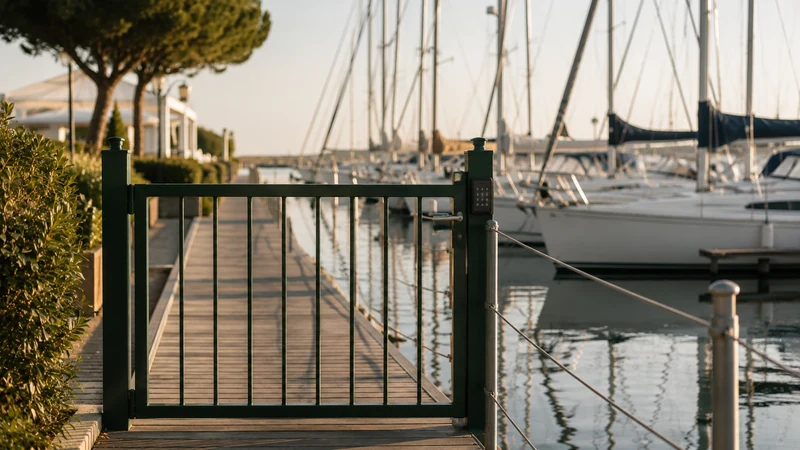
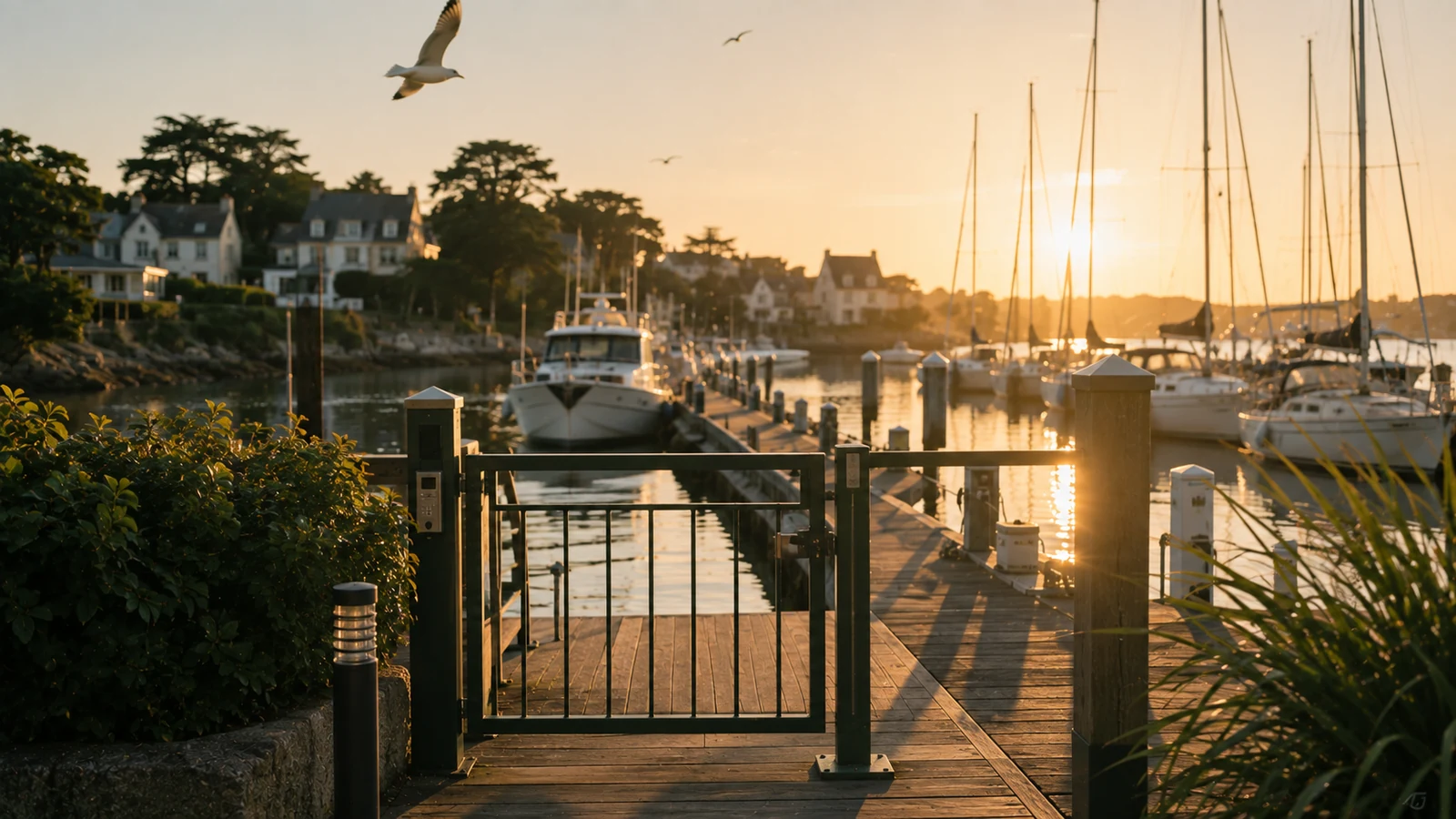
The boat owner receives a code valid during their stopover. It opens the gate to their pontoon and the toilet block door, and nothing else.
The need
One code per stopover, sent with the confirmation, valid from arrival to departure, with an adjustable margin before and after: an hour before the planned arrival for a boat that is early, an hour after departure for a last shower. The code opens the equipment already in place (pontoon gate or toilet block door with an electric strike) thanks to a module fitted by the installer of your choice. Setup is done with the harbour office, remotely. How these codes work is detailed in the temporary access code guide.
The question to ask
“Can the gate to pontoon B and the toilet block door respond to a code that changes with each stopover?” Compatibility is checked with you, from photos or by video call, before anything is ordered. The access control and online booking page explains how the booking controls the opening.
The common pitfall
The single toilet block code, displayed on the harbour office window and changed at the start of the season. By September, it is being passed from boat to boat, then well beyond the harbour. A code per stopover stops when the boat leaves, and every opening stays linked to the stopover that produced it.
Extending the stopover, leaving early, refunds
A stopover changes. The gale forecast for Thursday keeps the boat in for two more nights, or a weather window has it leaving a day early.
The need
To extend, the boat owner makes a new booking for the following nights, on the same berth if it is free, pays for it online and receives the corresponding access. For an early departure, they let the harbour office know, which releases the remaining nights and puts them back up for booking. If the extension falls on a berth that is already taken, the harbour master moves the boat and tells the boat owner before the evening.
The question to ask
“Are unused nights refunded, and who decides?” Write the rule into the stopover rules, for example: nights cancelled before 10 am refunded, none after that. In a harbour run through a revenue account, the revenue officer does not issue refunds on their own: the decision lies with the authorising officer, and the cancelled booking keeps a record of the refund decided.
The common pitfall
Dealing with early departures case by case, at the counter. The boat owner who leaves at 6 am to catch the tide does not call in at the office, claims by email three weeks later, and the staff member has to reconstruct the stopover from memory.
Arriving without a booking, in the evening and over lunchtime
Some boats will always arrive without having booked, and others will arrive when the office is closed. Both cases can be prepared for.
A sign at the reception pontoon
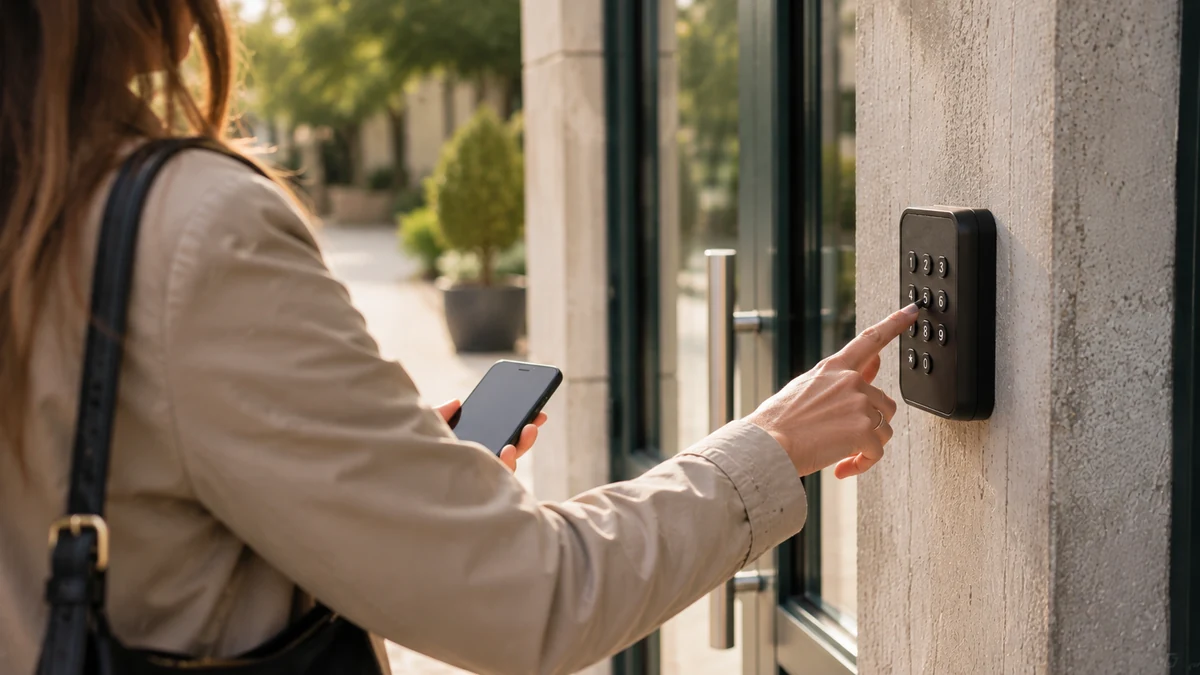
Put up a sign at the waiting pontoon that can be read from the deck: visitor berths free tonight can be booked online, with a QR code leading to the harbour’s booking page. The boat owner books from the pontoon, pays, receives their code and goes to their berth. It is the same journey as at sea, two hours later.
The next morning
A boat that has moored without doing anything is spotted on the first round. The harbour master can send it a payment link for the night spent.
VHF and emergency contact
The harbour office’s VHF channel and its listening hours appear in the confirmation and on the sign. Outside those hours, a number must answer: the harbour’s on-call duty, or the person named in the regulations. Also write down what to do in the event of damage, a fall into the water in the basin or a fire breaking out, with 196 for rescue at sea and 18 for the fire brigade.
Lunchtime
Between 12 noon and 2 pm, the office is closed and the harbour carries on. A boat that has booked enters the harbour and opens the pontoon with its code. The team does not have to move its break to wait for it.
Berths of annual berth holders who are away
In many harbours, visitor berths are in short supply in July, while year-round berths stay empty when their holder goes cruising or leaves their boat at the boatyard.
The rule: the berth holder gives notice
The harbour regulations often require berth holders to declare absences of more than a few days. Make it simple, by email, by phone or on a form, with their departure and return dates. Without a declaration, the berth is not touched.
Opening those dates to stopovers
The harbour office then opens the berth to visitor bookings on the declared dates, keeping a night’s margin before the announced return. The schedule shows the berth as a visitor berth on those nights and as an annual berth the rest of the time. The berth holder keeps their code or badge active for the whole length of their contract, and both sets of entries appear in the same access log.
Coming back earlier than planned
This is the case to prepare for. The berth holder comes back two days before the announced date and finds a visiting boat on their berth. Keep a fallback berth, at the waiting pontoon or among the visitor berths, and write into the regulations that an early return must be announced to the harbour office, by VHF or by phone, before entering the harbour.
What stays with the harbour team
Everything above takes phone bookings, price calculations, trips to the counter and handing out badges off the office’s plate. That time goes to what nobody else can do in the team’s place.
- The welcome on the pontoon: a word of welcome, tomorrow’s weather, where to find the chandlery and the bakery.
- Help with mooring: an extra pair of hands to take a line in a crosswind, especially for a crew of two.
- Safety: rounds, the condition of pontoons, ladders and fire extinguishers, keeping watch over the basin in heavy weather, what to do in the event of damage.
- Special cases: the boat that does not fit in the planned berth, the extension on a berth already taken, the crew who need a mechanic.
The harbour master sees on their phone the day’s arrivals, the free berths and entries to the pontoons. From the office, the harbour office follows the season’s schedule and the access log, where every opening is time-stamped and linked to its stopover. Everyone sees what concerns them. If the municipality also runs a campsite, the same arrangement lets it open earlier in spring: that is the subject of the guide on the municipal campsite out of season. The platform’s price is on the pricing page: €59 excl. VAT per month, all included, no commitment and no commission.
Organising your harbour’s stopovers in six steps
- Survey the visitor berths
For each pontoon, note the maximum length, the width between finger pontoons and the minimum depth at low tide, and place each berth in a length band.
- Set the price grid
One price per length band and per night, high and low season with dates, what is included written down in black and white, any special rates.
- Write the stopover rules
Time that counts as a night, extension, early departure, refund rule, notice of absence from annual berth holders.
- Check the equipment
Pontoon gates and toilet block door: compatibility checked from photos or by video call, module fitted by the installer of your choice, remote setup.
- Prepare the confirmation
Harbour regulations, arrival instructions, pontoon plan, VHF channel and listening hours, on-call number and emergency numbers.
- Put up the sign and open
QR code at the reception pontoon, full trial run with a boat from the harbour on a weekday evening, then bookings opened to visiting boat owners.
Before opening stopovers online: 12 points to check
- Each visitor berth has its maximum length, width and depth recorded.
- The stopover request states the length, beam and draught.
- The price grid by length and per night is finalised, with the season dates.
- The time that counts as a night is written into the stopover rules.
- The harbour regulations are attached to every confirmation.
- The stopover code opens the pontoon gate and the toilet block, and only those.
- The margins before arrival and after departure are set.
- The refund rule for an early departure is written down and known to the team.
- A sign with a QR code awaits boats without a booking at the reception pontoon.
- The VHF channel, its listening hours and the on-call number appear on the confirmation.
- Annual berth holders know how to declare their absences.
- A fallback berth is planned for a return earlier than expected.
Your questions
Can a boat owner book a visitor berth on the same day?
Yes, as long as a berth in their length band is free. They book from the sea or from the reception pontoon, pay online and receive their code straight away. The harbour master sees the arrival added to the day’s schedule.
Does the boat owner have to install an app?
No. They receive their code by SMS and email with their confirmation, with no account to create. They enter it at the pontoon gate and at the toilet block door.
What happens if the boat arrives a night late?
Their code is valid for the booked stopover, with the margin set before and after. They let the harbour office know by phone or email. Your stopover rules say whether the unused night is still due.
Do annual berth holders use the same code as visitors?
No. Each berth holder keeps their own code or badge, active for the length of their contract, and each visiting boat owner receives a code limited to their stopover. Both open the same gate and appear in the same access log.
How is the stopover paid for in a municipal harbour run through a public revenue account (régie)?
Online, at the time of booking, through a process compatible with the requirements for public revenue accounts. The revenue officer has the summary for the period and the Treasury accountant receives the accounting export.
Can a river mooring without an office be organised this way?
Yes. The mooring works like a small harbour: visitor berths are booked and paid for online, and the code opens access to the pontoon for the length of the stay. Plan for a staff member who comes by every day and a contact number displayed on site.
Who welcomes the boat owner when the harbour office is closed?
Nobody is waiting for them at the gate: they already have their berth, their code and the instructions in their confirmation. The next day, the team comes by to say hello.
Official references
Read next
See a stopover from end to end, from request to pontoon
A free 30-minute demo to follow a stopover from the online request to the pontoon opening, with your visitor berths and your price grid.