
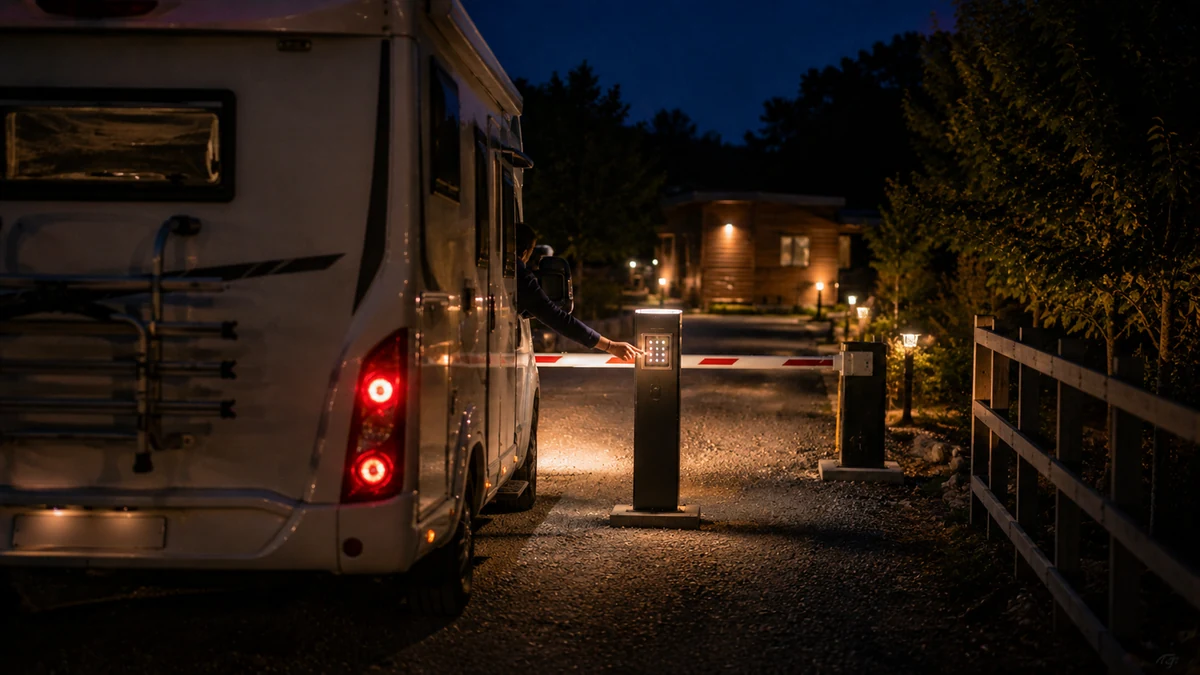
| What changes | High season | Shoulder seasons | Winter |
|---|---|---|---|
| Home | Office open, seasonal worker on site | No one on duty, a member of staff comes by every day | Closed, or a few pitches if the resolution provides for it |
| Booking | Online and at the office | Online, including on the day by QR code | Online, for the open pitches |
| Payment | Online or at the office, through the régie | Online, when booking | Online, when booking |
| Access | Code for the stay, with the office as back-up | Barrier and toilet block code for the stay | Code for the stay, access limited to the open pitches |
| Toilet blocks | All blocks open | One block open, with hot water and heating | One block protected from frost, or closed |
| Pricing | High season rate approved by the council | Shoulder season rate approved by the council | Winter rate approved by the council, or closure |
Municipal campsite out of season: what the municipality needs
Many municipal campsites live off two months. The reception office opens at the end of June with a seasonal worker, closes at the end of August, and the rest of the year the barrier stays down. Yet requests come in outside those dates: cycle tourists in May, retired motorhome owners in September, families over the Ascension Day long weekend, workers from a nearby building site in October.
What stops a campsite opening earlier and later is rarely the ground. It is reception: who takes bookings, who collects payment, who hands over the toilet block key, who opens the barrier at 8 pm for the car arriving from Lyon. A municipality of 900 residents cannot put a member of staff in the office from 8 am to 9 pm in April for four occupied pitches.
This guide is for municipalities that run their campsite themselves, through a régie, and want to keep it that way. It does not cover the municipal motorhome aire, which has its own guide: running a municipal motorhome aire. It shows what can be automated, what remains to be decided by the municipal council, and what needs organising on the ground for the shoulder seasons to go well.
What the municipality keeps: its council-approved rates and its régie
Moving to online booking changes neither the council resolution on rates nor the municipality’s accounting process. Both remain the foundation.
The need
The rate voted by the municipal council applies as it is to every booking: basic pitch, pitch with electricity, adult, child, vehicle, high season, shoulder seasons. Online payment goes into the existing public revenue account (régie), through a process compatible with the requirements for public revenue accounts, and the Treasury accountant receives an export for the period. The payment collection and régie page explains how this is set up.
The question to ask
“Does the instrument establishing our régie provide for online payment?” If not, it is amended with the Treasury accountant before opening. This is also the time to check the list of authorised revenue types: overnight stays, electricity and, where applicable, the deposit for a badge or key.
The common pitfall
Opening in April at the July rate, for lack of a shoulder season rate approved by the council. The first customers find the price high for a campsite that is a third empty, and the council has to pass an urgent resolution in May.
Online booking and payment for the pitch
Out of season, online booking replaces the reception desk. The camper chooses their dates and pitch, sees the amount, pays and receives their confirmation.
The need
A pitch schedule open for booking during the approved periods, with separate pitches by use: tent, caravan, motorhome, with or without electricity. Payment is made at the time of booking, and the confirmation goes out straight away. The town hall office sees campsite bookings and community hall bookings on the same schedule.
The question to ask
“Which pitches do we open in April?” Rarely all of them. The pitches close to the open toilet block, on ground that doesn’t turn to mud after a week of rain, are often enough. The others stay closed to booking until June.
The common pitfall
Taking phone bookings on the side, written down in a notebook. On Saturday, two campers have the same pitch, and nobody is there to sort it out. Out of season, a single booking channel avoids that kind of weekend.
The barrier and toilet block code, valid for the stay
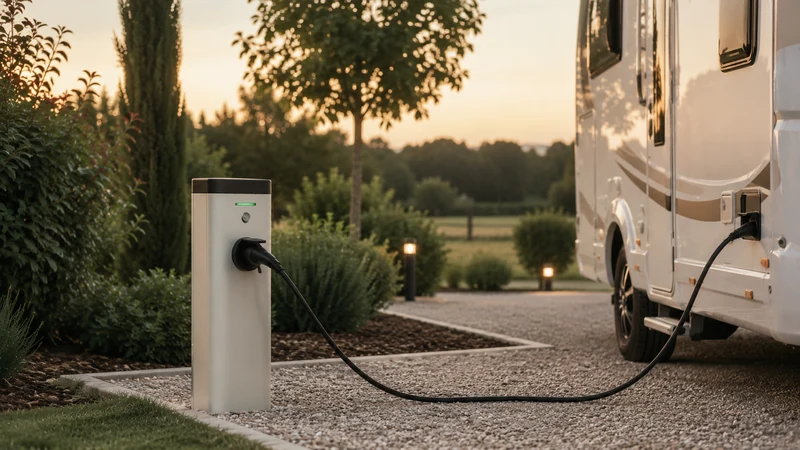
With their confirmation, the camper receives an access code or a QR code valid for their stay. It opens the entrance barrier and the door of the open toilet block.
The need
A code that works from the first day to the last, with an adjustable margin before arrival and after departure, and that switches off on its own afterwards. The code controls the equipment already in place – barrier, gate or the toilet block door’s electric strike – through a module fitted by the municipality’s installer. Setup is done with you, remotely. The motorhome aire management software page shows the same process on an aire.
The question to ask
“Can the barrier and the toilet block door respond to a code that changes with every stay?” Compatibility is checked with you, from photos or by video call. If the block door only has a key lock, the question needs to be raised before the season, not the day before opening.
The common pitfall
The toilet block key left in a letterbox, on the promise that it will be returned on departure. By October, three keys are missing and the cylinder has to be changed. With a code per stay, there is no longer a key to collect on departure.
Instructions and site rules attached to the confirmation
A camper who arrives at 9 pm will find nobody to show them around. Everything they need to know goes out with their confirmation.
The site rules
This is the campsite’s own document, the one displayed at reception in summer. Attached to each confirmation, it reaches every camper before they arrive: quiet hours, driving on site, pets, fires, waste, what to do in a weather warning.
Arrival instructions
- The map of the campsite, with the open pitches, the toilet block in use and the water point.
- The route from the road, especially if the entrance is poorly signposted at night.
- What is closed out of season: swimming pool, play area, second toilet block.
- The number to call if there is a problem, and the hours when it is answered.
- The emergency numbers, 18 and 15, and the campsite’s exact address to give to the emergency services.
A short version at the entrance
A sign at the barrier sets out the five essential rules and the town hall’s number. It is what campers read if they haven’t opened their emails on the road.
Arriving without a booking: a QR code at the entrance
Out of season, a good share of campers arrive without booking. They saw the campsite sign from the main road, or someone told them about the village in the café.
The need
A sign at the entrance, lit or visible in headlights, with a QR code that leads to the campsite’s booking page. The camper books from the barrier, pays online, receives their code and drives in. In five minutes, in front of the entrance, they do what someone else did the day before from home.
The question to ask
“What about campers whose phone has no signal?” Check network coverage at the entrance before putting up the sign. If it is weak, put the sign where there is coverage, or show the town hall’s number on the sign for the next morning.
The common pitfall
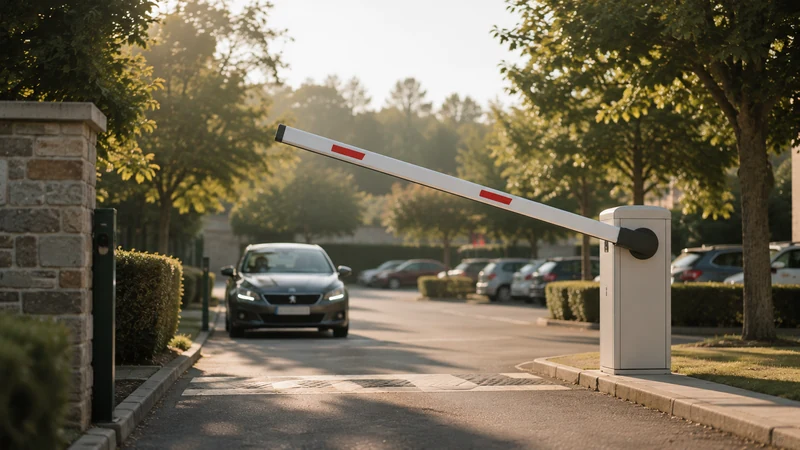
Leaving the barrier open out of season so as not to turn anyone away. The campsite becomes a free car park, the member of staff finds vehicles every morning that they know nothing about, and the campers who paid wonder why they bothered.
What to prepare: council resolution, water and heating in the toilet blocks
Automation takes care of reception. The rest is prepared at the town hall and on the ground, several weeks before the first opening.
The council resolution
The municipal council votes the opening periods and the rates for each: high season, shoulder seasons, possibly winter. Set clear dates, from 1 April to 30 June and from 1 September to 31 October for example, and a rate for each period. A single resolution for the year avoids going back to the council at every change of season.
Water
In April and October, nights can bring frost. The pipes of a toilet block designed for summer must be checked: draining, insulating exposed pipes, frost-proofing outdoor taps. Keep the best-protected block open, and close the others.
Heating and hot water
On a morning at 6 °C, campers expect hot water and a block that isn’t cold. A water heater sized for the shoulder seasons and extra heating in the open block, set on a timer, are usually enough. Go over energy use with the technical services before choosing the opening dates.
Lighting
The entrance, the path to the toilet block and the block itself must be lit. A camper who arrives at 9 pm in October arrives in the dark.
A daily visit from a member of staff, and the neighbours
A campsite out of season with no office open is still a campsite with people staying in it. Someone has to come by every day.
The staff visit
A council employee, or the seasonal worker if their contract is extended, comes by once a day, at a set time if possible: cleaning the toilet block, emptying the bins, a look at the pitches, a word of welcome for new arrivals. This visit happens at a time that suits the team, since nobody is waiting for the staff member to get in. They see the day’s arrivals and departures on their phone, and the town hall office follows bookings and the access log from the town hall.
Weekends and bank holidays
Plan who comes by on Saturday and Sunday, and who answers the phone. A rota between two members of staff, or a volunteer councillor, is often enough for the few occupied pitches.
The neighbours
Local residents are used to a campsite that is closed ten months out of twelve. Let them know before the first opening, in the municipal newsletter or with a note through their letterboxes. Remind them of the quiet hours in the site rules, and give them the number to call if there is a problem.
A municipality that also runs a harbour or a river stopover will find the same logic in the guide on managing stopovers in a marina.
Tourist tax and the changeover calendar
Two last points need settling before opening: the tourist tax, and how to move from one period to the next.
Tourist tax: a point to go over with the relevant department
If the municipality or the inter-municipal authority has introduced a tourist tax by resolution, it also applies to overnight stays in the shoulder seasons. Check with the department that manages it which scheme applies to the campsite, actual or flat-rate, and which documents it expects from you for the declaration. The Collectivités locales page on the tourist tax sets out the framework and links to the year’s practical guide.
The changeover calendar
- Mid-March: water turned back on in the chosen toilet block, water heater tested, code tested at the barrier and toilet block.
- 1 April: shoulder season pitches open for booking, QR code sign put up.
- End of June: seasonal worker arrives, office and all pitches open.
- Early September: back to the shoulder season set-up, one toilet block, one visit a day.
- End of October: booking closes, frost protection, review of overnight stays with the revenue officer.
The motorhomes and aires page gives the overall picture, and the pitch booking page shows what the camper sees. To see the platform on your campsite, request a free 30-minute demo.
Opening your municipal campsite out of season in six steps
- Choose the periods and the pitches
Shoulder season dates, pitches open near the toilet block you keep in use, ground that stays usable in wet weather.
- Have the council resolution passed
Opening periods and the rate for each period in a single resolution for the year.
- Adapt the régie
Check with the Treasury accountant that the instrument establishing the revenue account provides for online payment and the list of revenue types.
- Prepare the equipment
Compatibility of the barrier and the toilet block door checked from photos or by video call, module fitted by the municipality’s installer, remote setup.
- Get the toilet block ready for winter
Frost protection, hot water, extra heating, lighting for the entrance and the path.
- Organise visits and open
A member of staff who comes by every day, weekend on-call cover, local residents informed, QR code sign at the entrance, then booking opens.
Before opening out of season: 12 points to check
- The council resolution sets the opening periods and the rate for each.
- The instrument establishing the régie provides for online payment.
- The pitches open out of season have been chosen and are the only ones bookable.
- The code opens the barrier and the toilet block, for the stay only.
- The site rules and instructions go out with every confirmation.
- A sign with a QR code awaits arrivals without a booking, where there is network coverage.
- The open toilet block is protected from frost and has hot water.
- The entrance and the path to the toilet block are lit.
- A member of staff comes by every day, and weekend on-call cover is arranged.
- A number that can be reached is shown on the sign and in the confirmation.
- Local residents have been told about the opening.
- The department that manages the tourist tax knows the campsite is opening for longer.
Your questions
Do you need a member of staff on site to open a municipal campsite out of season?
Not all the time. Booking, payment and access are done online, and the camper gets in with their code. A member of staff comes by once a day for upkeep, checks and welcoming new arrivals.
Can the municipality keep its council-approved rates?
Yes. The rate set in the resolution applies to every booking, with different rates by period and by type of pitch. The council only needs to vote a shoulder season rate if it doesn’t have one.
Is online payment compatible with the campsite’s régie?
Yes, the process is compatible with the requirements for public revenue accounts. The instrument establishing the régie must provide for online payment collection, and the Treasury accountant receives an export for the period.
What does a camper who arrives at 9 pm without booking do?
They scan the QR code on the sign at the entrance, book a free pitch, pay online and receive their code. They get in without waiting for anyone.
Can you open just part of the campsite?
Yes, and that is the most common approach out of season. Only the chosen pitches are open for booking, and the others stay closed until the summer.
Is the tourist tax calculated automatically?
No. The tourist tax is prepared with the municipal or inter-municipal department that manages it: applicable scheme, documents required, how often to declare.
How is this different from a motorhome aire?
A campsite takes tents, caravans and motorhomes, with toilet blocks to maintain and its own site rules. The municipal motorhome aire has its own guide on the blog.
Official references
Read next
Open your campsite in spring, without staffing reception
A free 30-minute demo to see how your campers book, pay and get in out of season, with your council-approved rates and your régie.