
| Criterion | What is looked at | Indicative weight |
|---|---|---|
| Number of registered members | Licences from the past season, playing in this sports hall | 25 points |
| Proportion of young people | Registered members under 18, junior sports sections | 20 points |
| Level of play | Teams entered in competition and level of the league | 15 points |
| Length of tenure of the time slot | Time slot held in previous seasons and actually used | 15 points |
| Openness to the public | Taster sessions, adapted sport, sport for health, recreational activity open to residents | 15 points |
| Sharing of late time slots | Accepting a share of the time slots after 9 pm | 10 points |
Allocating sports hall time slots to associations: what makes an allocation accepted
A sports hall open from 5 pm to 11 pm on weekdays offers thirty hours of evening time. Basketball, handball, badminton, the keep-fit club and the football club that comes indoors for the winter all compete for them. The daytime belongs to the primary schools and the secondary school, the weekend to matches. Every spring, the sports department puts the puzzle back together.
The legal framework leaves it to the municipality. Article L2144-3 of the French General Local Authorities Code provides that municipal premises may be used by associations or political parties that request them. The mayor determines the conditions of use, taking into account the needs of managing municipal property, the running of services and the maintenance of public order, and the municipal council sets, where necessary, the contribution due. The text can be read on Légifrance. It does not say how to share the hours between clubs: that is what this guide is about.
An allocation is accepted when each club understands why it got one time slot and not another. Three things help: a calendar everyone knows, criteria written down before the requests, and a review that compares what was booked with what was used. The sports hall booking software page shows how the season’s schedule and the clubs’ access fit into the same tool.
A typical season calendar
The same calendar every year, published in April, avoids late requests and last-minute decisions over the phone at the end of August.
- April: the request form and criteria are sent to associations, with the deadline.
- May and June: requests come back, often after the clubs’ general meetings. The sports department checks that they are complete.
- End of June: first draft schedule, cross-checked with the needs of the primary schools and the secondary school.
- Early July: allocation committee, with the councillors, the sports department and, where there is one, the municipal sports office.
- Mid-July: written notification to each association, with its time slots and a deadline for reporting an error.
- End of August: hire agreements signed and access sent out.
- September: start of the season, with two or three weeks of running-in to correct honest mistakes.
Some municipalities push the committee back to September, when registrations are known. The figures are more accurate, but the clubs start again without knowing their hours. A middle way: allocate in July on the previous season’s figures, then adjust two or three time slots at the autumn half-term.
Gathering requests on a single form
Everything starts with the request form. If it is vague, the committee will decide on impressions.
The need
The same form for all associations. It asks for the number of registered members in the past season by age category, the teams entered in competition and their level, the preferred time slots in order of preference, acceptable fallback time slots, the names of the contact person and the coach, and the equipment to be stored. A certificate from the sports federation or the list of licences avoids figures being rounded up.
The question to ask
“If you do not get your first choice, which time slot can you accept?” Written into the request from the start, the answer gives the committee some leeway and prevents a refusal arising from a misunderstanding.
The common pitfall
Rolling over last year’s time slots without a written request. The club that has lost half its members keeps its three evenings, the one that has doubled waits, and the new volleyball section never even knew it had to ask.
Written criteria, published before the requests
The criteria are decided and published before requests open. The table at the top of the article gives an example with indicative weights, to adapt to your municipality and have approved by the councillors.
Six criteria that come up again and again
- The number of registered members from the past season, verifiable, counting those who play in this sports hall.
- The proportion of young people: under-18s have timetable constraints (end of lessons, transport, homework) that adults do not.
- The level of play: a team in a regional league has training needs that recreational play does not.
- Length of tenure of the time slot: stability matters for families and volunteer coaches, provided the time slot has been used.
- Openness to the public: taster sessions, adapted sport, sport for health, recreational activity open to residents.
- Sharing of late time slots: the 9:30 pm to 11 pm time slot rotates between the adult clubs instead of falling to the same one every year.
Staying fair
A written criterion protects the club as much as the municipality. It removes the reward for the most insistent club and puts a stop to suspicions of favouritism. Apply the same grid to everyone, keep the calculation behind each allocation, and you will be able to explain it in a minute to an unhappy chair. If the municipality asks for a contribution, the amount is a matter for the municipal council. The schedule then applies the rate for each user group, down to free use for local associations if that is the rule voted.
Committee, notification and hire agreement
The committee decides, the notification explains, the hire agreement sets things down. Three documents, three moments.
The committee
It works on a draft schedule already calculated using the grid. The remaining conflicts, two clubs for the same Tuesday, are settled in the meeting, criteria in hand. Some municipalities bring the club chairs together before the decision: when everyone sees the whole schedule, time slot swaps often happen between the clubs themselves.
The notification
A letter or an email per association: its time slots, the sports hall, the period, the weeks of closure, and the reason in the event of a refusal or a time slot different from the one requested. Allow ten days to report an error before fixing the schedule.
The hire agreement
It sets out the time slots, the period, the conditions of use, the association’s insurance, storage of equipment, the contribution if there is one, and the rule for taking back an unused time slot. It is attached to the confirmation of the recurring booking, then signed before the start of the season. The season’s time slots are set up once, as recurring bookings over the year, and the association management page shows how free use is still recorded.
Schools in the same schedule
School time generally comes first during the day. The boundaries blur at 4:30 pm, on Wednesday afternoons and during school competitions.
The need
The timetables of the municipality’s primary schools and the secondary school known before the committee meets, with the exact times: end of lessons, travel time, the secondary school sports association’s time slots on Wednesday afternoons. For a secondary school, use of a municipal sports hall is generally covered by an agreement with the school and the département. Its calendar goes into the same schedule as the clubs’.
The question to ask
“Is the 4 pm to 5:30 pm school time slot used every Thursday, or only some weeks?” Timetables change at the start of the school year. A check in September sometimes frees up a late afternoon for the 8-to-10-year-olds’ basketball school.
The common pitfall
Reserving the whole day for schools “by default”, holidays included. The sports hall stands empty during the shorter school holidays, when a club wanted to run a training camp there. Remove the school holidays from the school time slots and open those weeks to one-off requests.
Tournaments, training camps and one-off time slots
Tournaments, holiday training camps, youth tournament days, general meetings, end-of-season galas: one-off requests arrive all year round and upset the grid.
The need
A notice rule, for example six weeks before a weekend tournament. A clear priority: the official match calendar comes before a training camp. And a shared hall schedule where you can see straight away who is displaced, including the sports hall, the dojo and the annexe hall. When a tournament takes over the Saturday, the clubs whose training is cancelled are told at the same time as the organiser receives their confirmation.
The question to ask
“Which time slots does this tournament cancel, and who tells the clubs concerned?” If the answer is “we’ll see”, the badminton club will find refreshment tables on its courts at 9 am on Saturday.
The common pitfall
Giving weekends to whoever calls first. The big clubs, better organised, take all the dates in May, and the small dance association has nothing left for its gala. Set a number of weekends per association per season, and open requests on an announced date.
One code per association, valid for its own time slots only
The set of keys entrusted to the chair passes from hand to hand for years. One code per association, valid for its own recurring time slots only, puts things back on a clean footing.
The need
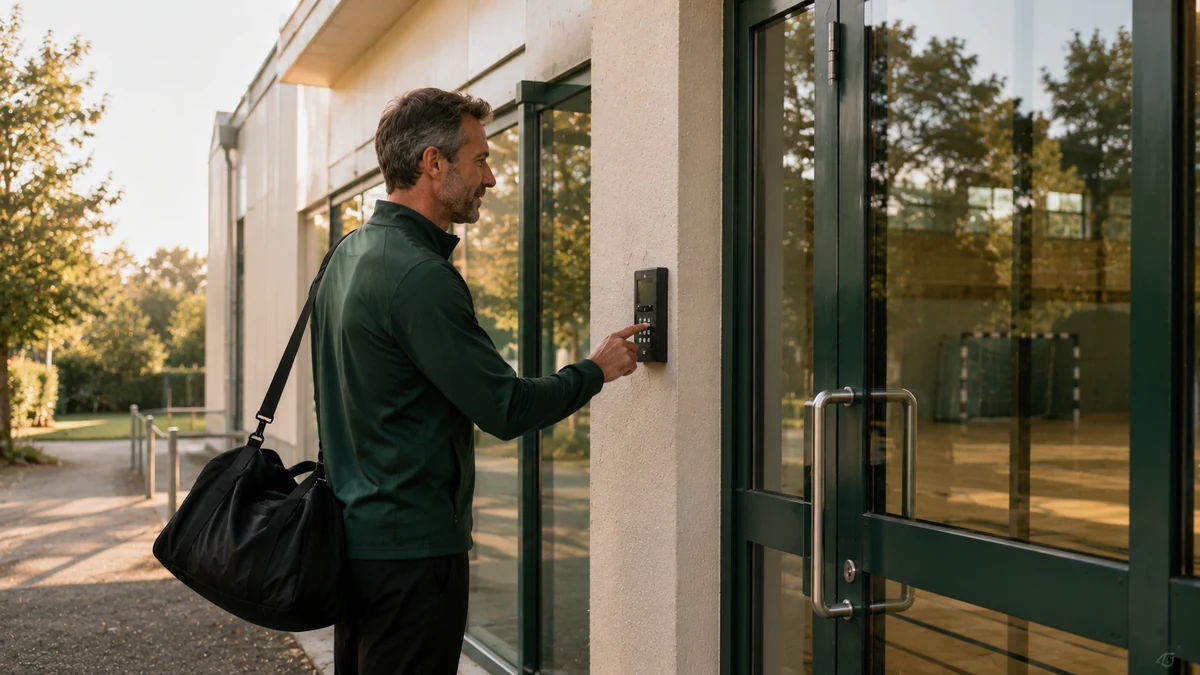
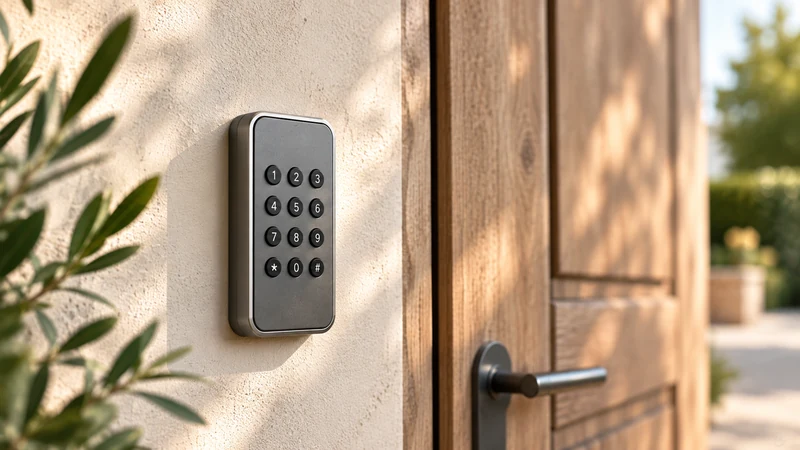
Each club’s contact person receives, with the confirmation of their time slots, a code or a QR code that opens the sports hall on Tuesdays from 7 pm to 9:30 pm and on Thursdays from 6 pm to 8 pm, with a margin set for setting up and tidying away. Outside those times, the code does nothing. It opens the door already in place thanks to a module fitted by the municipality’s own installer, and setup is done with you, remotely. The sports hall booking page shows the journey from the club’s side.
The question to ask
“What happens when the club changes chair, or the coach leaves mid-season?” With a key, you have to get it back, or let it go. With a code tied to the time slot, the right to enter stays with the club, and the new contact person receives the association’s access.
The common pitfall
A single code for all the clubs using the sports hall. It goes round the messaging groups, opens the hall at any hour, and the day equipment goes missing, the history tells you nothing useful. One code per association, limited to its time slots, makes every entry easy to read without casting suspicion on anyone.
The end-of-season review: comparing booked and used
At the end of the season, the sports department compares the booked time slots with the openings actually recorded. Every opening by code is time-stamped and linked to the booking in the access log. You can see that one Wednesday time slot opened every week, and that another has stayed shut since the February holidays.
A tool for fairness
The aim is to give unused hours back to those who are short of them, not to penalise. An empty time slot deprives another association, a school or residents of an available hall. Announce the rule in the hire agreement from the start of the season: a time slot with no openings for several weeks in a row is first discussed with the club, and can then be offered to another association.
Reading the figures with care
- An opening is not attendance: if the previous club leaves the door open, the next one goes in without entering its code.
- An empty month often has a reason: hall taken by a tournament, coach ill, team withdrawn.
- Talk to the club before drawing conclusions: a phone call in November sorts out more than a remark in committee in July.
Reallocating
Two moments lend themselves to it: the autumn half-term, for a time slot abandoned since the start of the season, and the July committee for the following season. A club that gives back a time slot of its own accord during the year does not lose points the following year: that is the behaviour the rule aims to encourage. The freed-up hours become bookable again, by another club or by residents at the rate for their user group. The same logic of access by time slot works for the village hall, as the article on handing over the village hall keys shows. To see a season’s schedule and the clubs’ access on a case close to yours, request a demo.
Allocating sports hall time slots to associations in six steps
- Publish the calendar and the criteria
In April, send every association the request form, the criteria grid and the deadline.
- Gather the requests
Collect the completed forms with registered members by age, teams entered, preferred time slots and acceptable fallback time slots.
- Cross-check with school use
Add in the timetables of the primary schools and the secondary school, then work out a first draft schedule using the grid.
- Convene the committee
Settle the remaining conflicts with the criteria in hand, and keep the calculation behind each allocation.
- Notify and sign agreements
Notify each association of its time slots and the reasons for any refusal, then have the hire agreement signed before the start of the season.
- Send out access and prepare the review
Give each club a code valid for its own time slots only, then at the end of the season compare booked time slots with recorded openings.
Before the allocation committee: 11 points to check
- The season calendar was published in April, with the deadline for requests.
- All associations received the same form.
- The criteria grid and its weights have been approved by the councillors and published.
- The registered members declared are backed by a certificate or a list.
- The timetables of the primary schools and the secondary school are known and included in the schedule.
- School holidays are removed from the school time slots.
- Late time slots rotate between the adult clubs.
- A notice and priority rule exists for tournaments and training camps.
- The hire agreement provides for an unused time slot to be taken back, after discussion with the club.
- Each association will have its own code, limited to its time slots.
- Last season’s review was presented before the new allocation.
Your questions
Who sets the conditions for associations’ use of the sports hall?
Article L2144-3 of the French General Local Authorities Code (Code général des collectivités territoriales) gives the mayor the task of determining the conditions under which associations may use municipal premises. The municipal council sets, where necessary, the contribution due. The sports department prepares the allocation, which the committee and the councillors then approve.
Can use of the sports hall be free of charge?
Yes, the contribution is set by the municipal council where necessary, and many municipalities ask nothing of local associations. There is still a booking: it holds the time slots, the access and the record of occupancy.
What should be done with a time slot that is booked but never used?
Talk to the club first: there is often a reason, an absent coach or a team that has withdrawn. If the time slot stays empty, apply the rule set out in the hire agreement and offer it to another association or to residents.
How should a new club with no track record be treated?
Keep a small reserve of time slots for new associations, or offer a trial time slot for one season. At the next review, the club enters the grid like the others.
Do schools always come before clubs?
During the day, school time generally comes first. After 4:30 pm, on Wednesdays and during the holidays, priority is discussed and written into the schedule. Checking timetables in September sometimes frees up time slots.
Is a different code needed for each association?
Yes. One code per association, valid for its own time slots only, makes every opening easy to read in the access log. A code shared by all the clubs gets passed around quickly and means you can no longer tell who went in.
Is comparing booked and used time a way of policing the clubs?
The aim is fairness: giving unused hours back to those who are short of them. Announce the rule at the start of the season, read the figures with care and talk to the club before any decision.
Official references
Read next
- Community hall booking and access: 12 points to pin down before choosing Local authorities
- Condition reports, deposits and hire agreements: making community hall hire secure Local authorities
- Village hall key handover: who opens up on Saturday morning, and how to organise it Local authorities
- Espace sur Demande (ANCT) or ASLOT: free or complete, which should you choose for your halls? Comparison
Prepare the sports hall season with the clubs
A free 30-minute demo to see associations’ recurring time slots, each club’s code and the log of openings.