
| Arrangement | What it asks of the town hall | Main risks | What remains human |
|---|---|---|---|
| Councillor or staff member on call | Someone available every hire weekend, on arrival and often on departure | Reliance on one person, key left with the hirer overnight | Welcome, walk round the hall, condition report, emergency contact |
| Collection from the town hall on Friday | A handover appointment, a signed register, a return on Monday | Possible copy, key not returned on Monday, lost key | Condition report, emergency contact, instructions |
| Key box with a code | Changing the code and checking the key between two hires | Unchanged code being passed around, key taken away, box forced open | Visit between two hires, condition report, emergency contact |
| Code sent with the booking | A door that can be controlled, instructions attached to the confirmation | Hirer on their own on arrival if the instructions are poorly written | Condition report at a fixed time, emergency contact, safety instructions |
Village hall key handover: who opens up on Saturday morning?
In many municipalities, the key handover depends on one or two people. The town hall secretary hands over the keys on Friday at 4:30 pm, a deputy mayor opens up on Saturday when the hirer could not come by, and the maintenance officer collects everything on Monday while doing the condition report. As long as everyone is available, it works. A holiday, flu in November or a last-minute hire is enough to throw everything off.
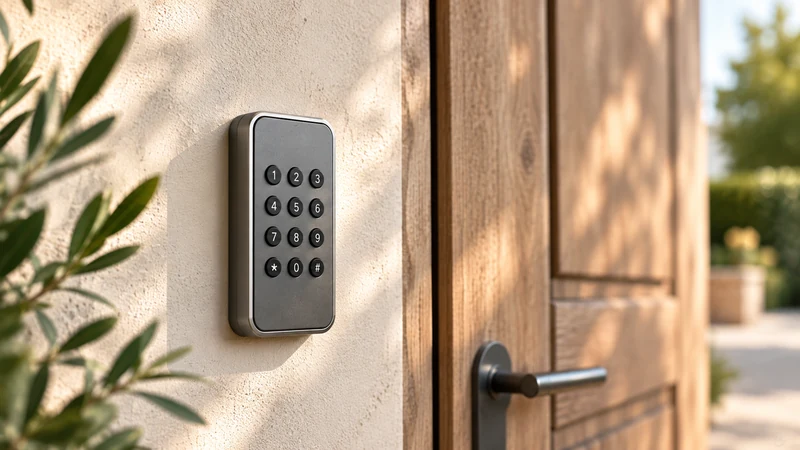
There are four arrangements in use: the councillor or staff member on call who opens up on site, collecting the keys from the town hall on Friday, the key box with a code fixed near the door, and the code sent with the booking, valid for that time slot only. The table at the top of the article sums them up, and section 5 covers what does not change.
The hire agreement, the deposit and the condition report checklist have their own guide: condition report, deposit and hire agreement for a community hall. Here, we only follow the path of the key, or of whatever replaces it, between the town hall and the hirer.
The councillor or staff member on call
This is the oldest arrangement. A councillor or staff member meets the hirer outside the hall at the agreed time, opens up, walks round the premises with them and leaves.
The need
Someone who can be reached every hire weekend and lives close enough to be on site within ten minutes. An on-call rota kept up to date, and a phone that rings at 8 am on Saturday when the caterer arrives earlier than planned. In return, the town hall sees the hirer, shows them the cut-offs and the exits, and notes the condition of the hall with them.
The question to ask
“Who opens up when the deputy mayor on call is on holiday, and who knows that?” If the answer comes down to a single name, the arrangement depends on a single person. After an election, the handover often happens with an incomplete set of keys.
The common pitfall
Leaving the key with the hirer on Saturday evening “to avoid coming back” on Sunday. The key spends the night at their home, comes back on Monday through the town hall letterbox, or does not come back at all. The municipality keeps the burden of on-call duty and loses the only advantage of this arrangement: knowing where the key is.
Collecting the keys from the town hall on Friday
The hirer comes to the town hall on Friday, signs the register, leaves their deposit if there is one, and goes away with the keys. They bring them back on Monday.
The need
Opening hours that suit hirers’ schedules, which often means an appointment after 5 pm for someone who works. A handover register signed on the way out and on the way back. And a hall closed to other uses until the key has come back, since the hirer can get in from Friday evening to Monday morning.
The question to ask
“How many keys to the hall exist today, and where are they?” After a few years of Friday collections, few town halls can answer with certainty. An ordinary key can be copied in a few minutes, and there is no way of knowing whether that has happened.
The common pitfall
The key not returned on Monday. The hirer has gone back to work and will drop by “during the week”. Meanwhile, the exit condition report is on hold, so is Wednesday’s club meeting, and the secretary makes two calls to get the keys back.

The key box with a code
A code box sealed into the wall, near the entrance. The town hall gives the code to the hirer, who takes the key out on arrival and puts it back when leaving.
The need
Someone who changes the box code after each hire and checks that the key has come back. Without that visit, October’s code still opens the box in March. And a sturdy box, sealed in, in a well-lit spot.
The question to ask
“Who goes out to change the code and check the key when two hires follow each other on Saturday and Sunday?” Someone has to come back in between. You end up with on-call duty again, shorter than the first kind, but just as real.
The common pitfall
Keeping the same code all year because nobody has time to change it. Previous hirers know it, so do their guests, and the key stored in the box gives permanent access to anyone who wants it. Another pitfall: the key taken away by mistake on Sunday evening, leaving the box empty for the next hirer.
The code sent with the booking, valid for that time slot only
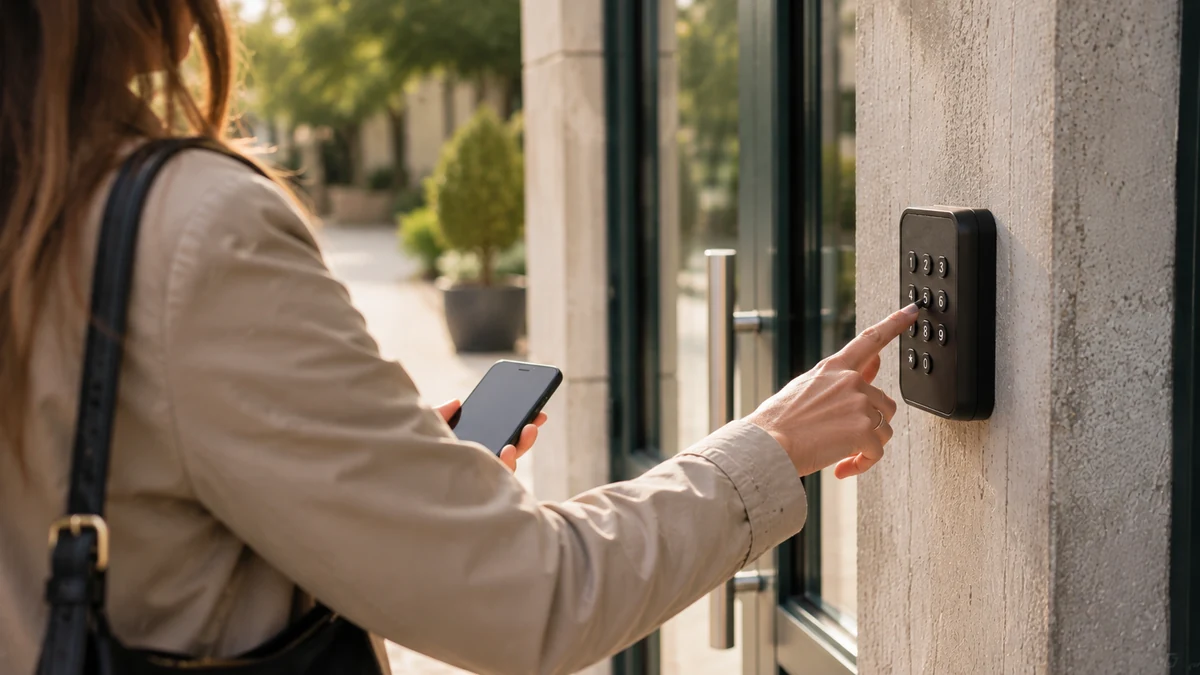
The hirer books and pays online. With the confirmation, they receive an access code or a QR code that opens the hall door during their time slot. The town hall sets a margin before and after: an hour earlier to set out the tables, for example, and a little time after the end to tidy up.
What it asks of the town hall
A door whose opening can be controlled. The code opens the equipment already in place (electric strike, lock or cylinder) thanks to a module fitted by the municipality’s own installer. A door with only a simple mechanical lock needs to be equipped. Compatibility is checked with you, from photos or by video call, and setup is done with you, remotely. The key and access management page details what replaces each step of the key routine.
What changes in terms of risk
- No copies: there is no object to duplicate, and a code passed on to someone else is useless outside the time slot.
- Nothing to return on Monday: the code stops at the end of the time slot, or as soon as the booking is cancelled.
- Nothing to replace: no cylinder to change because a set of keys has gone missing.
- A record: every opening is time-stamped and linked to the booking in the access log. If the door was opened at 7 am on Sunday, you know about it.
Its limits
The code does not welcome anyone. The hirer arrives on their own, so the instructions, the number to call and the time of the condition report must reach them beforehand, with the confirmation. Also keep one or two mechanical keys at the town hall for the technical services and the emergency services. The resident’s side of the journey is on the online village hall booking page.
What remains human, whatever the arrangement
Three things need a person, however the door is opened. They take less time when nobody is chasing a set of keys any more.
The condition report
It is done at a fixed time, regardless of where the key has travelled: Friday at 5 pm for entry, Monday at 9 am for exit, for example. The staff member opens up with the key kept at the town hall and carries out the check, whether or not the hirer has come to collect a set of keys. The content of the condition report, the checklist and deductions from the deposit are covered in the guide condition report, deposit and hire agreement, and the condition reports and deposits page shows how the entry history helps establish the facts.
The emergency contact
At 11 pm on a Saturday, the circuit breaker trips or an exit door will not close. The hirer must have a number that answers, written in the confirmation and displayed in the hall. Decide who holds it each weekend: the councillor on call, the maintenance officer, or both in turn. This on-call duty gets few calls, which makes it easier to cover than on-call duty for opening up.
The safety instructions
Maximum number of people, emergency exits kept clear, location of the fire extinguishers, gas shut-off in the kitchen, time the music must stop, windows closed on the neighbours’ side. They are read before arriving: attached to the confirmation with the house rules and the hire agreement, then displayed near the entrance. One clear page in large print works better than twelve pages of rules.
A lost key: what to do, in order
One Monday morning, the hirer calls: they have looked everywhere and the key has gone. Here is the order to follow.
- Ask for a description of what happened. Lost in the hall, in the street, on a key ring bearing the municipality’s name? A key labelled “village hall” lost outside the hall is more worrying than an anonymous key dropped 30 km away.
- Search the hall and its surroundings. Many “lost” keys are sitting in a kitchen drawer or in a bag of tablecloths.
- Get a written statement. Date, time, circumstances, signed by the hirer. It will be used for the insurance and for whatever follow-up the hire agreement provides for.
- Decide whether to change the cylinder. If the key can be linked to the hall, change it without delay. A new cylinder means having all the keys cut again and handing them back out to everyone who had one.
- Apply the hire agreement. If it provides that the replacement costs are borne by the hirer, apply it. If it says nothing, add the clause for future hires.
- Update the list of keys. Who has what, and since when. It is often on that day that the town hall finds out it no longer knew.
With a code, the equivalent takes two lines. The code stops at the end of the time slot, and a code shared by mistake is useless outside it. A hirer who has lost their message finds it again in their confirmation, or calls the emergency contact.
Changing arrangements without missing a weekend
The change is prepared during a quiet month. November or January are better than June, the season of weddings and school fêtes.
Take stock of the keys
List the sets of keys: town hall, technical services, associations, councillors, former staff. Collect those no longer in use. For associations that use the hall every week, plan what will replace their key before taking it back. The article on allocating sports hall time slots to associations shows how to set up their recurring time slots with a code per club.
Close the door on the past
If the door keeps a key lock as well as the code, changing its cylinder at the switchover makes any unknown copies useless. The new keys stay at the town hall, for the technical services and the emergency services.
Test on a quiet weekend
A first test hire, with a staff member who can be reached and a key close at hand. Check that the code is received, the opening time, the margin before and after the time slot and how easy the instructions are to read. Make corrections before the first big hire.
Update the documents
The “key handover” clause in the house rules and the hire agreement becomes an “access” clause: how the code arrives, when it works, who to call. Have it approved through the municipality’s usual procedure.
One way in per hall
The keys kept at the town hall are for staff and the emergency services, never for a hirer.
Informing associations and residents
A change of habit mostly fails through lack of information. Plan four messages, at different times.
- Associations: a letter a month before, then a meeting of the chairs. They will ask who receives the code and what happens if the contact person changes.
- Hirers already booked: those who have booked for the spring need to know how they will get in. A phone call or a personal email, rather than a line in the newsletter.
- Residents: the municipal newsletter, the municipality’s website, the booking page and a poster on the hall door. The journey comes down to four steps: book, pay, receive the code, go in.
- Town hall reception: the secretary and the receptionist answer the calls. A one-page sheet of frequently asked questions saves them from improvising.
Residents who do not book online still have someone to talk to: the secretary prepares the booking with them at the counter or over the phone, and sends them a payment link. The councils and local authorities page gives the overall picture, and the day-to-day running of the hall is detailed on running a village hall. The price is on the pricing page: €59 excl. VAT per month, all included, no commitment.
Moving from a key to a code for the village hall in six steps
- Take stock of the keys
List every set of keys in circulation, collect those no longer used and note those kept by associations.
- Check the door
Send photos of the door and its lock to check compatibility; the module is fitted by the installer of your choice.
- Write the instructions and the emergency contact
One clear page with the capacity, the exits, the cut-offs, the end time and the number to call, attached to every confirmation.
- Set a fixed time for the condition report
Choose an entry slot and an exit slot for the staff member, independent of where the key travels.
- Test on a quiet hire
Check that the code is received, the opening time and the margin before and after the time slot, with a staff member who can be reached.
- Inform people, then switch over
Inform the associations, the hirers already booked, the residents and the town hall reception, then change the lock cylinder if the door still has a key lock.
Before changing the key handover: 11 points to check
- The town hall knows how many keys to the hall exist and who holds them.
- Keys no longer in use have been collected.
- The door can be controlled, or its equipment has been planned with the installer.
- The margin before and after the time slot is set for setting up and tidying away.
- The safety instructions fit on one page and are attached to the confirmation.
- An emergency number is covered every weekend and displayed in the hall.
- The entry and exit condition reports have a fixed time.
- The hire agreement says what happens if a key is lost or a door is forced.
- One or two keys stay at the town hall for the technical services and the emergency services.
- Associations and hirers already booked have been informed personally.
- Town hall reception has a sheet of answers to frequently asked questions.
Your questions
What should you do if the hirer loses the village hall key?
Ask them to describe what happened, search the hall and its surroundings, then ask for a written statement. If the key can be linked to the hall, change the cylinder without delay and update the list of keys.
Who pays for changing the cylinder after a key is lost?
The hire agreement says. If it provides that the costs are borne by the hirer, apply it. If it says nothing, add the clause for future hires.
Is a key box suitable for a small municipality?
It helps out when hires are spread out and someone can change the code after each one. If two hires follow each other over a weekend, someone has to come back in between, and a code that is never changed ends up being passed around.
Can the hirer get in before their time slot to set up the hall?
Yes, if the town hall allows for it. A margin before and after the time slot can be set, for example an hour earlier to set out the tables. Outside that period, the code does not open.
What happens to the code if the booking is cancelled?
It stops working as soon as the booking is cancelled. The hirer can no longer get in, without anyone having to collect anything.
Is a condition report still useful with a code?
Yes. It is done at a fixed time, on entry and on exit, by a staff member who opens up with the key kept at the town hall. The code changes where the key travels, not the check on the condition of the hall.
Does the code work on the hall’s current door?
In most cases, yes: it controls the electric strike, lock or cylinder already in place, thanks to a module fitted by the municipality’s own installer. A purely mechanical lock needs to be equipped. Compatibility is checked with you, from photos or by video call.
Read next
- Community hall booking and access: 12 points to pin down before choosing Local authorities
- Condition reports, deposits and hire agreements: making community hall hire secure Local authorities
- Allocating sports hall time slots to associations: calendar, criteria and end-of-season review Local authorities
- Espace sur Demande (ANCT) or ASLOT: free or complete, which should you choose for your halls? Comparison
See the code’s journey, from booking to door
A free 30-minute demo to see how the code goes out with the booking, opens the hall during the time slot and stops at the end.